A Saunter Through the Dictionary

A significant problem with using the label “atheist” is this.  No matter how you couch the term, or clarify its meaning for yourself, others see it in a massively negative light.  Part of this negative image is earned – many very public atheists have been and are still today obnoxious and so belligerently opposed to religion that they would put off any variety of theist.  Our bad image also comes from the core assumption by others that atheism is, in and of itself, not a philosophy – it is simply the rejection of a belief – without any apparent replacement upon which to based one’s moral system or ethical code.

So, as a lover of word origins, I though I would explore some alternative terms that I might use to label my personal theology for others.  Here are some candidates:

  • Ambitheism – A belief that one can construct a life philosophy flexible enough to function whether or not god exists; an ambitheist might deal with conflicting emotions about the existence of god, and so develops a belief system capable of adapting to either truth.
  • Amitheism – A belief that god is literally the love we show our neighbors with whom we live in community; an amitheist places the Golden Rule above all else and lives a fully nonviolent life.
  • Endotheism – A belief that god is not separate, but within each of us; an endotheist would value all of creation as god is within every subatomic particle – perhaps god is every subatomic particle.
  • Isotheism – A belief that god is not “above” or “greater” that us, but part of us and our environment; and isotheist would likely resemble a pantheist, but with no sense of the divine or sacred, since everything is divine and sacred.
  • Omnitheism – A belief that god is not separate, but simply represents the totality of all power, energy, knowledge, and truth; an omnitheist would concentrate on enhancing one’s awareness of and connection with the “godness” of everyone and everything.
  • Syntheisim – A belief that would extend omnitheism to include the time continuum; a syntheist would seek to become more aware of and connect with the “godness” and everyone and everything in every time and place as a single synchronistic existence.
  • Veratheism – A belief that god is truth, for only out of truth can love and goodness emerge; a veratheist would seek complete honesty in all relations, removing all masks, and resolving all conflict and falsehood.

One plus to any, or all, of these concepts is that they emphasize the positive attributes that I believe most atheists possess.  They focus on core values of love, truth, peace, and wisdom, and not simply on the rejection of a perceived flaw in human thinking.

I’m Back

I haven’t posted to this blog for many weeks.  My absence has not been for lack of desire to communicate with you, dear reader.  Rather, I have been wandering – wandering in my mind for words worth writing, for messages worth reading, for feelings worth expressing.

When I wander, I allow life to speak to me.  I open myself to whatever the universe is saying and then I seek meaning in the messages.  I envy those who can sit in lotus poses and meditate for hours on end to access the voices of the cosmos.  I fear that my puppy mind has long grown past the point of such discipline.  So, I search for sustenance by random grazing.  My process is wholly unpredictable, even chaotic.  But, when my beautiful muse speaks to me, she injects me with an understanding beyond all knowing and a joy no drug can match.

Last Friday, I took a day off and drove to Frankenmuth, a little tourist town of quirky shops and manufactured cuteness.  I strolled through an enormous bead shop, admired faerie art, turned a music store clerk onto European goth rock, and sped through a soul-sucking Christmas store.  My only purchases were a bag of specialty popcorn and some random candy from bygone days.  I bought them thinking that I would savor them over the coming weeks, enjoying the occasional taste of toffee and sugar.

But, last night, I sat in my living room resting, flipping among the cable channels mindlessly.  Beside me was the now empty bag of popcorn and a few remaining pieces of the candy.  In just a few days, I had not been able to resist the repeated narcotic allure of the promise of instant gratification.  Whether I had actually enjoyed the consumption had no meaning – I had simply wanted to consume and could not resist the urge.

This morning, I was besieged by a wave of synchronous voices – a Facebook link to an article about why our young people are leaving churches in waves; a heart-wrenching biography of a young woman struggling to survive economically without selling her soul or losing her way; and a finely crafted essay on capitalism calling for us to seek a new model for living and being together as humans.

For the past few years, I have traveled this road largely alone.  Oh, I have friends – dear and treasured friends – many of whom are treading similar paths.  But I have lived alone within a sea of humanity.  I have preached of love, of the agape of religious community.  I have spoken promoting pacifism and nonviolence, of how we must learn to love ourselves and others equally.  And when the Occupy Wall Street movement began, I jumped at the opportunity to try to shape all of that frustration and anger into a constructive and positive force for change.

But, the pull of my old life is hard.  Financial debt constantly reminds me of the need to seek monetary compensation for my labor, even though I would gladly do this work for free.  The privileges earned only through the circumstances of my birth tempt me with their serene siren song of comfort.  And I mourn the loss of my family elders, my first mentors, now all dead and kept alive only in my memories.

I know in my mind that we must change – that my old life is not sustainable.  I know that I cannot, as they say, only talk the talk.  I must walk the walk.  I am trying, dear friends, oh I am trying.  But resisting that candy takes so much effort.  Taking risks and having the courage to reach out, to be vulnerable, frightens me.  And, in allowing myself to be vulnerable, do I risk losing my capacity to lead, to help effect the changes I deem necessary in our society?

In recent months, I have watched helplessly as people lost hope in causes.  I have struggled as comrades, consumed by doubts and fears, dropped out of activities and organizations.  Perhaps such attrition, while regrettable, is inevitable.  But, is the flame of our hope flickering on the verge of evanescence?

As we emerge from winter, thankfully a gentle and easy winter, perhaps the time for a new dawn has come.  Maybe this time, we will subvert the dominant paradigm.  Can we build a new Racovia, a new Hopedale?  Can we envision and bring about a new model of being together as humans?

I do so fervently hope so.  And I invite you to join me in the journey.

Occupy Church – Christmas Day Sermon

Occupy Church
Christmas Day Sermon, December 25, 2011
Unitarian Universalist Fellowship of Midland
Rev. Jeff Liebmann

Chalice Lighting

We light this chalice as the flame within us,
But also as the beacon light for seekers,
The hearth flame for the homeless and hopeless,
And as the torch to engulf injustice

Opening Words
From “The Mood of Christmas” by Howard Thurman

When the song of the angels is stilled,
When the star in the sky is gone,
When the kings and the princes are home,
When the shepherds are back with their flocks,
The work of Christmas begins:
To find the lost,
To heal the broken,
To feed the hungry,
To release the prisoner,
To rebuild the nations,
To bring peace among brothers,
To make music in the heart.

Time for All Ages – Jericho Road

Throughout his ministry, learned people questioned Jesus, testing his knowledge of Hebrew law and his understanding of the Kingdom promised to the Jewish people. On one of these occasions, a lawyer asked Jesus, “What must I do to inherit eternal life?” Jesus replied (one might imagine in a slightly condescending tone), “What is written in the law? What do you read there?…You shall love the Lord your God with all your heart, and with all your soul, and with all your strength, and with all your mind; and your neighbor as yourself.”

Now, perhaps the lawyer saw this as an opportunity to trip up the young rabbi, for Jesus gave what might be considered a stock answer, quoting Leviticus 19:18 “You shall not take vengeance or bear a grudge against any of your people, but you shall love your neighbor as yourself.” So, the lawyer asks a seemingly innocent question, “And who is my neighbor?” In his usual fashion, Jesus replied with this story, but with a somewhat shocking twist.

A man was going down from Jerusalem to Jericho. Now, any listener of the day knew that this road was notoriously dangerous and difficult. The Jericho Road was known as the “Way of Blood” for all the victims that had fallen to attacking thieves on its winding curves that were perfect for ambushes. Jesus continued, explaining that the man indeed fell into the hands of robbers, who stripped him, beat him, and went away, leaving him half dead.

Jesus continues, saying that a priest (possible a Jewish Pharisee) was going down that road; and when he saw the prone victim, he passed by on the other side. So likewise a Levite (who in this context is likely meant to portray a Jewish politician), when he came to the place and saw him, passed by on the other side. Now, we must be careful here. Our quick temptation would be to assume that Jesus is skewering Jewish religious and political leaders – which may well have been his intent. However, on the Jericho Road, one’s likely first assumption might well be that this situation may well be a trap and that a stopping traveler would himself be ambushed. Also, strict purity rules applied to priests and Levites that could well have prevented them from touching an apparently dead body.

Now, here comes the big twist. A Samaritan while travelling came near him; and when he saw him, he was moved with pity. He went to him and bandaged his wounds, having poured oil and wine on them. Then he put him on his own animal, brought him to an inn, and took care of him. The next day he took out two denarii, gave them to the innkeeper, and said, “Take care of him; and when I come back, I will repay you whatever more you spend.”

Now, the people of Samaria were not Jews. In fact, Samaritans were hated by Jesus’ audience. The Samaritans in turn hated the Jews. Tensions were particularly high in the early decades of the first century because Samaritans had desecrated the Jewish Temple at Passover with human bones.

So, when Jesus asks the lawyer, “Which of these three, do you think, was a neighbor to the man who fell into the hands of the robbers?” the lawyer likely grudgingly says not “The Samaritan,” but rather, “The one who showed him mercy.” And Jesus said to him, “Go and do likewise.”

This important parable is only one of many times when Jesus clearly articulates that his message was not meant for only one people, but for all.

Reading
From “Beyond Vietnam: A Time to Break Silence,” by Rev. Martin Luther King
(Speech delivered on April 4, 1967, at a meeting of Clergy and Laity Concerned at Riverside Church in New York City)

A true revolution of values will soon cause us to question the fairness and justice of many of our past and present policies. On the one hand we are called to play the good Samaritan on life’s roadside; but that will be only an initial act. One day we must come to see that the whole Jericho road must be transformed so that men and women will not be constantly beaten and robbed as they make their journey on life’s highway. True compassion is more than flinging a coin to a beggar; it is not haphazard and superficial. It comes to see that an edifice which produces beggars needs restructuring. A true revolution of values will soon look uneasily on the glaring contrast of poverty and wealth…

The Western arrogance of feeling that it has everything to teach others and nothing to learn from them is not just. A true revolution of values will lay hands on the world order and say of war: “This way of settling differences is not just.” …A nation that continues year after year to spend more money on military defense than on programs of social uplift is approaching spiritual death…

America, the richest and most powerful nation in the world, can well lead the way in this revolution of values. There is nothing, except a tragic death wish, to prevent us from reordering our priorities, so that the pursuit of peace will take precedence over the pursuit of war. There is nothing to keep us from molding a recalcitrant status quo with bruised hands until we have fashioned it into a brotherhood….

A genuine revolution of values means in the final analysis that our loyalties must become ecumenical rather than sectional. Every nation must now develop an overriding loyalty to mankind as a whole in order to preserve the best in their individual societies.

Sermon – Occupy Church

When I tell people that I am a Unitarian Universalist minister, their faces usually assume a quizzical gesture that often does not go away even after I explain what that means. Sometimes, people have actually heard of us, even attended one of our congregations.

The reactions differ significantly when I attend a gathering of clergy. Non-Christians – rabbis, imams, Buddhist priests – almost universally welcome me into the group. Among the Christians, the reactions can vary across the widest spectrum. Some smile broadly, and share discussions of their participation in social action projects with Unitarian Universalist ministers. Others simply turn away.

Then there are the rare few who do little to hide their disdain, but stay to engage in theological debate. These ministers often dismiss my assertion that there are many Unitarian Universalists who consider themselves Christian. And when they learn that I consider myself a religious atheist, the intensity of the debate kicks up several notches. It is not uncommon to be grilled regarding my definition of words like “prayer,” “religion,” and other reverential terms.

When I have the opportunity, I ask them to describe to me the God they worship. Interestingly, they often articulate an essential, universal mystery that they are surprised to learn that I believe in, too. Often, the only real stumbling block arises over the nature of the man Jesus.

I explain that I believe that Jesus (or an amalgamation of concurrent prophets preaching the same message) existed. I agree with the essential teachings. I simply do not believe in his purported resurrection from the dead, the actual details of which the four canonical gospels wildly disagree.

But, that is enough. For these clergy, that one dogmatic assertion is all that matters to turn me into one of “them.” And this is such a shame. Because right now, at this critical juncture of our history, the great teachings of all the world’s religions have come together in common purpose.

For every major world philosophy and religion teaches against the pursuit of unbridled wealth, against greed, and against failing to care for your brothers and sisters as you would care for yourself. Charity is one of the Five Pillars of Islam. In the Mahabharata, Bhishma, one of Hinduism’s great yogis, names greed as the source out of which all other evil arises: “Covetousness alone is a great destroyer of merit and goodness. From covetousness proceeds sin. It is from this source that sin and irreligiousness flow, together with great misery. This covetousness is the spring also of all the cunning and hypocrisy in the world.”

The Tao Teh Ching tells us that, “There is no crime greater than greed.  No disaster greater than discontentment. No fault greater than avarice.” The Adi Granth, the holy book of the Sikhs, asks: “Where there is greed, what love can there be?” The Four Noble Truths of Buddhism teach us that enlightenment cannot be achieved so long as we suffer, and that suffering is caused by desire. Greed, hate, and ignorance are the Three Poisons that bind us to desire.

From the commandments against stealing and covetousness, to countless citations against greed, the Hebrew Bible abounds with warnings against the love of money. And, as one of the seven deadly sins (arguably the most important), Christian texts have spoken against greed for centuries.

But, let us return to the focus of this day. The four canonical Gospels of Matthew, Mark, Luke, and John generally portray Jesus as a relatively even-tempered, if passionate, person. When is the one time in all four accounts that he completely loses his temper? When he enters the Temple in Jerusalem, the holiest place of his faith, and sees people buying and selling animals and changing money. He overturns the tables, and chases them away, even using a whip of cords in John’s account. One must find it interesting that even Jesus, the Prince of Peace and avowed opponent of taking up the sword, was moved to violence when the house of prayer was corrupted and perverted by those pursuing money.

My clerical colleagues and I often have very different concepts of “God,” of that unifying principle of life. Whatever form that force takes, however, we can all strive to tap into its power. Our Universalist ancestors preached this message by simply saying that “God is Love.” Even a nonbeliever, whether you are non-religious, agnostic, even atheist, can develop a willingness to accept that simple definition. We engage with the wonder and mystery of our universe, of all existence simply by loving each other. And if it helps some people to call that “God” so be it.

I know that many people struggle with that concept – not just the “God” label, but implications of accepting that God is Love. How do I love a stranger? How do I love my nameless neighbor, the co-worker I barely know, that clerk that makes my coffee in the morning? We start by caring. We start by stopping on the road and helping the beaten and robbed – by being as concerned for the well-being of everyone as for our own well-being.

Dr. King described this beginning in his speech: “This call for a world-wide fellowship that lifts neighborly concern beyond one’s tribe, race, class and nation is in reality a call for an all-embracing and unconditional love for all…This oft misunderstood and misinterpreted concept – so readily dismissed by the Nietzsches of the world as a weak and cowardly force – has now become an absolute necessity for the survival of [humankind]. When I speak of love I am not speaking of some sentimental and weak response. I am speaking of that force which all of the great religions have seen as the supreme unifying principle of life. Love is somehow the key that unlocks the door which leads to ultimate reality. This Hindu-Moslem-Christian-Jewish-Buddhist belief about ultimate reality is beautifully summed up in the first epistle of Saint John:
Let us love one another; for love is God and everyone that loveth is born of God and knoweth God. He that loveth not, knoweth not God; for God is love. If we love one another God dwelleth in us, and his love is perfected in us.”

But, this is just the beginning. The next step is to tear up the Jericho Road we have paved with unchecked greed, corrupted oversight, and indifference. We must rip up that pavement and lay a new surface. We must root out the hiding places of the bandits, lining the highway with inviting paths and resting points. We must remove the tollbooths restricting access to free travel. We must straighten out the dangerous curves and widen the road so that all can walk together, side by side.

This work may be back-breaking. We will not always agree on the direction of the road, or how to traverse obstacles that arise. At times we may find ourselves laboring over a lonely stretch with no end in sight. And, let’s be realistic. We will not want for nay-sayers, people with money and power wishing to stop us in our quest, and for masses too consumed with their own lives to help us wield the picks and shovels.

But, this is the real work of Christmas – not pageants and concerts; not mangers and myth; and certainly not layaways and credit cards. The real work of Christmas is the message of Jesus, not the details of his birth – but rather to find the lost, to feed the hungry, to release the prisoner, and to rebuild the nations.

On several occasions during his ministry, Jesus articulated the roadmap for creating this new highway, the Kingdom he foresaw. The Beatitudes were blessings Jesus bestowed on all the people as a blueprint, a design for this new world that included Jews and Samaritans, priests and paupers, politicians and prostitutes.

Today, in the 21st century, we who are working in the here and now, striving to create a human world of equality and justice, can learn from these teachings. We can adapt them to our own actions in this life.

  • Blessed are the dispirited: for they most understand and welcome necessary changes to our broken and corrupted economic, political, and social systems.
  • Blessed are they that mourn: for they help others comprehend the depths of sorrow created by war, hate, greed, and ignorance.
  • Blessed are the nonviolent: for they shall model a better way to those who equate force with power and killing with justice.
  • Blessed are the searchers, the questioners: for they shall be open to new experiences and to finding new answers to our problems.
  • Blessed are the merciful: for every act of love and caring is returned to us one hundred-fold. A universal law of every human philosophy teaches us to love our neighbor as we would ourselves be loved.
  • Blessed are the sincere and innocent: for they understand that the business of humankind is not profit, but is humankind itself.
  • Blessed are the peacemakers: for they shall lay the way to common purpose and understanding in society and in concert with our planet.
  • Blessed are those persecuted in the name of justice: for their sacrifice motivates us all to act and to have faith in the power of commitment and love.

When the song of the angels is stilled,
When the star in the sky is gone,
When the kings and the princes are home,
When the shepherds are back with their flocks,
The work of Christmas begins.

Prayerful Reflection

Spirit of life and love that we know by many names, be with us as we enter an attitude of reflection, meditation, and prayer.

Dr. King continued: Now let us begin. Now let us rededicate ourselves to the long and bitter — but beautiful — struggle for a new world. This is the calling of the sons of God, and our brothers wait eagerly for our response. Shall we say the odds are too great? Shall we tell them the struggle is too hard? Will our message be that the forces of American life militate against their arrival as full men, and we send our deepest regrets? Or will there be another message, of longing, of hope, of solidarity with their yearnings, of commitment to their cause, whatever the cost? The choice is ours, and though we might prefer it otherwise we must choose in this crucial moment of human history.  Let it be so.

Extinguishing the Chalice/Closing Words

At the end of his speech, the Rev. Dr. Martin Luther King, Jr. quoted Unitarian poet James Russell Lowell:
Once to every man and nation comes the moment to decide,
In the strife of truth and falsehood, for the good or evil side;
Some great cause, God’s new Messiah, off’ring each the bloom or blight,
And the choice goes by forever twixt that darkness and that light.
Though the cause of evil prosper, yet ’tis truth alone is strong;
Though her portion be the scaffold, and upon the throne be wrong:
Yet that scaffold sways the future, and behind the dim unknown,
Standeth God within the shadow keeping watch above his own.

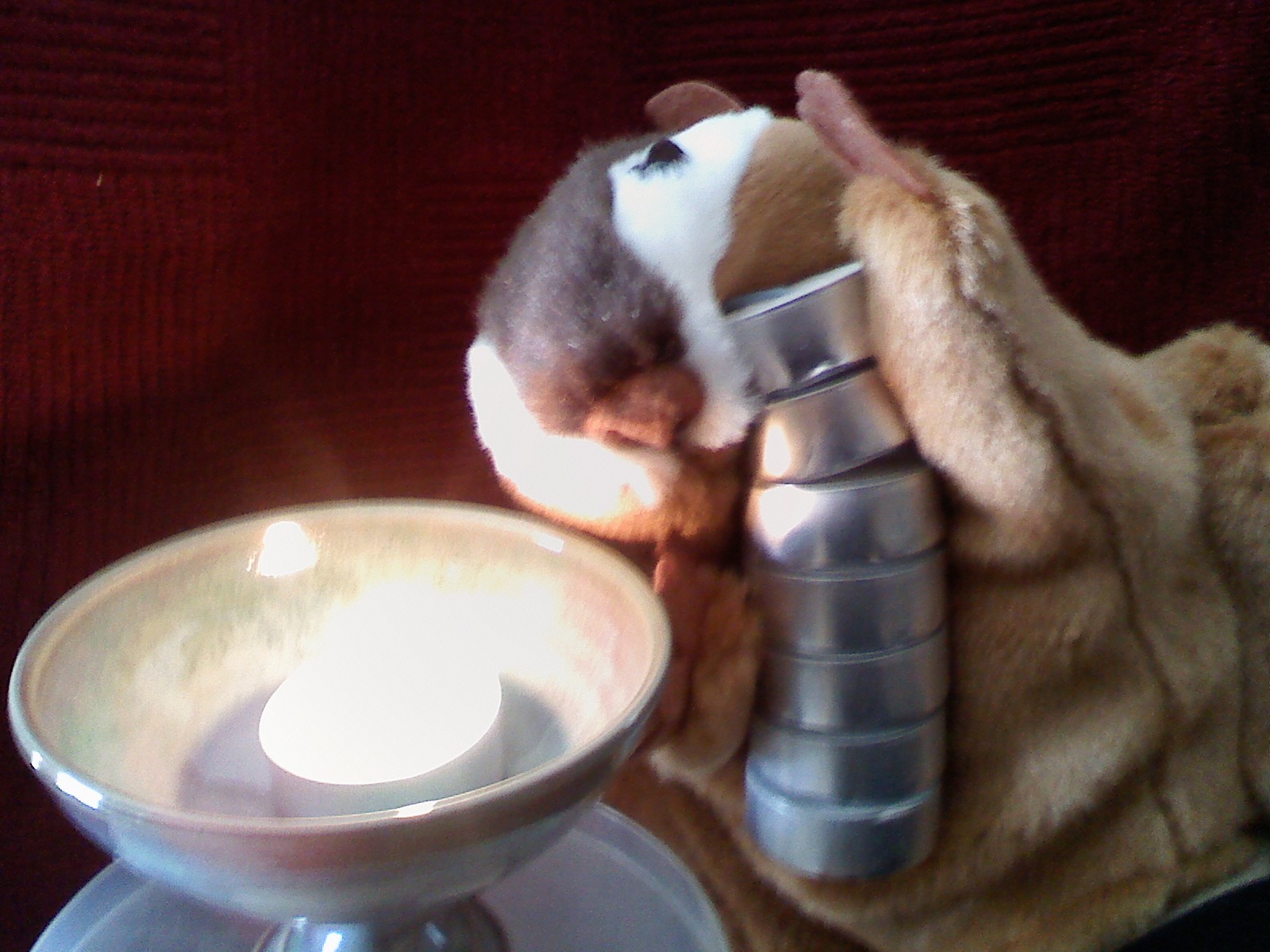
Chesna, the Chalica Chipmunk

This is a Time for All Ages story I wrote for this coming Sunday’s Chalica Eve service.
======

There once was a chipmunk named Chesna.  She lived above the ceiling in the roof of a Unitarian Universalist church. Chesna was very quiet and no one in the congregation knew about her.  Sometimes, the minister thought he heard tiny footsteps.  And after a potluck dinner, someone might notice that a cookie or two went missing.

But most of the time, Chesna stayed out of sight in the rafters where no one could find her.  The church was a great home for Chesna during most of the week.  Other than a few church staff, and people who came to some evening meetings, Chesna had the building all to herself.

She had the church all to herself except, that is, on Sundays.  Sunday was the most dangerous day because all the people came for services.  And though Chesna worried that the people may see her, or that she might scare the children, she still loved Sundays.

Chesna loved Sundays, because she loved worship services.  She loved the singing and the sermons, she loved listening to musicians and readers.  And she especially loved the Time for All Ages for the children. When the adults sang the children out, Chesna skittered along the roof beams to listen to their lessons. Chesna learned all about the seven principles, about the lives of famous Unitarian Universalists, and how to be kind and sure of herself.

Now, on the first Sunday of every month, this church held an additional worship service in the evening. Chesna loved these Sunday night services most of all.  In the evening, the songs sounded even more lovely and the prayers seemed even more important.  The Sunday night services were definitely Chesna’s favorite.

One year, right after Thanksgiving, the weather grew terribly cold.  The temperature dropped so low that Chesna snuck into the church closet and took some of the small candles.  She scattered them around her in the ceiling so she could stay warm if the cold grew too great.

On the first Sunday of that December, Chesna sat waiting for the evening service.  It was snowing outside and ice was forming on the tree branches.  The people entered and sat in the sanctuary and the service began.

Suddenly, in the middle of the worship, the lights went out! Ice had formed on the power lines outside until they grew so heavy that they snapped and fell.  The sanctuary was now plunged in darkness.  The younger children started to grow scared and the adults tried to calm them.

All of a sudden, right in front of the pulpit, there stood Chesna holding a stack of candles.  She trembled because she was carrying as much as she could.  Even more, though, she was scared that people might chase her out of the building and into the snow storm.

Everyone immediately hushed to silence.  Then, a small child stepped forward, took one of Chesna’s candles and lit it with the chalice light.  Another child stepped forward, and then another until seven children had lit the seven candles Chesna had carried from the rafters.  Now there was plenty of light in the sanctuary and the worship continued.

The people were so grateful to Chesna that they built a little home for her right next to the pulpit.  During that whole week, people came in with food for Chesna and material for bedding.  And each night, they lit a candle so that Chesna could stay warm.

From that year on, the church celebrated the first week of December as Chalica.  People lit a candle on each of the seven nights, one for each of our seven principles.  And, Chesna the Chalica Chipmunk lived there in the church and was part of every worship service for many years.

Life’s Little Steps

This past week provided a number of very interesting milestones in my life.  Each, in their own way, reminded me of how life moves on in relentless small changes and realizations.

I took my first week of vacation since arriving in Midland this past August.  I have found it challenging to force myself to take days off and to get away from my work.  I love doing ministry and the temptation to constantly reflect, write, or tinker with even mudane tasks is great.  But, I flew to Jacksonville to visit my daughter Ashley, her husband Kevin and my new granddaughter, Caitlin Elizabeth.
After 20-odd years, I had forgotten the crying, the endless string of feedings, and the cumbersome travel equipment.  But, my week with Caity also reminded me of the tiny steps we take every day as we learn and grow.  I watched her gaining control of her visual focus, searching out faces and voices.  I got to see many smiles of gleeful recognition.  And, as the video shows, she has just begun that first phase of controlling her body that starts with rolling over and holding your head up high.
I had promised myself that I would take an actual vacation over Thanksgiving.  Other than checking emails, I shocked myself by doing just that.  I refrained from writing, managing calendar events, or contemplating future sermons.  And I returned home much refreshed and ready to jump into the busy December holiday season.
I also returned home to a phone message about the delivery of my new CPAP machine.  After my cardiologist suggested a sleep test two months ago, the results determined (to my complete surprise) that I apparently have rather severe sleep apnea.  Last night was my first wearing the manageable, yet still cumbersome gear while sleeping.  It took several attempts to get all of the straps and hoses into their proper places (I think!) and I managed to sleep fairly well through the night.  Needless to say, though, I felt completely like Caity performing her first rollover, or reaching out in an effort to clasp a toy.
Our lives are never finished products.  When you take time to consider the challenges, the little steps from one age very much resemble those we take in every phase of growing and learning

The Real War on Terror

I imagine that I pestered my parents quite a bit as a seven-year-old child.  It was 1963, and a new show – Shock Theater – was airing late Friday night.  Starring Ghoulardi, one of the first in a long line of horror hosts continuing even today, Shock Theater presented B-grade monster and science fiction films to the generation born during the imminent threat of nuclear holocaust and Communist invasion.  We were a demographic ripe for the fertile nurturing of terror.

I had already seen The Twilight Zone, and The Outer Limits would burst on the scene later that year. So, I couldn’t wait to stay up past my bedtime for this offering.  What made Shock Theater different was that Ghoulardi was cool – a funny and irreverent Beatnik.  Ghoulardi became a master of the catch phrase.  If you happen to remember minor novelty hits like “The Bird is the Word,” and “Papa-Oom-Mow-Mow” by The Rivingtons – that was Ghoulardi.

Between cinematic classics like Kronos and The Deadly Mantis, Ghoulardi also exposed me to the classic Universal horror monster films of the 1930’s.  Even if you have never watched a minute of these movies, you know the themes.  These characters pervaded 20th century media and still represent icons of modern cultural literacy.

Dracula, the Vampire – a soulless, loveless creature of seemingly overwhelming strength and ability. Modeled after Vlad the Impaler, an historically notorious slaughterer of enemies, Dracula lives on today in endless film and print versions.  Vampire stories on the small screen range from Buffy and Angel, to Being Human and True Blood. And who could be oblivious to the new interpretation of the vampire myth that has a generation of young girls rapt in the Twilight series?

The vampire represents the terror of powerlessness, a hypnotic horror that doesn’t just kill your spirit quickly, but slowly drains it away.  The vampire is no force of nature, but a conscious and malevolent power bent on the deflowering of the innocent and the tainting of the pure.  Protection exists for those with unwavering faith, and especially strong believers can wield the tools capable of destroying the monster.  Ironically, mortal love is the one variable most able to foil the vampire’s plans.

In some ways quite the opposite of Bela Lugosi’s Count was Imhotep, the Mummy, a reanimated flesh golem whose sole purpose of existence is to complete the execution of an ancient curse.  The Mummy is less popular, especially among the ladies, perhaps because of his lack of independent initiative or creativity – and the dirty bandages don’t help.  The Mummy is a brute, pummeling or strangling victims, with none of the subtlety and finesse of the vampire.

The Mummy represents the terror of inevitability, because no matter what you do, the monster will eventually catch you.  Unlike the vampire, little can put the Mummy off your track as his slow but relentless pursuit wears you down until you relax your guard just once.  But, like the vampire, the Mummy has one key weakness that makes it ultimately vulnerable – his forbidden love for the Princess Ankh-es-en-amon.  And while his body is impervious to attack, the paper scroll containing his life-giving spell can be burned to end his threat.

A much more human character was Larry Talbot, the Wolfman – a gallant, but innocent soul infected with a disease that transforms his body and subjugates his mind.  Over time, writers have often pitted the werewolf and the vampire against each other, most notably in the recent Underworld series and the aforementioned Twilight books and films.  For, while we helpless rabble might lump one monster with another, these two are irrevocably different.  The vampire is lifeless, a heartless killing machine with only vague memories of mortality.  But, the werewolf is still a living human inflicted with the disease of lycanthropy.

The Wolfman symbolizes the terror of corruption, an unyielding virus that insidiously attacks the body from within.  The lycanthrope has the mighty power of animal nature, driven by the mysterious power of the Moon, an eternal metaphor for darkness and mystery.  The true evil of the werewolf lies in the non-death of the circumstance.  Unlike the mummy or the vampire, lycanthropy steals away one’s free will, but not one’s life.  Once again, in death there lies release, but only when delivered by the hands of a loved one.

And then, there is the ultimate Monster, the unnatural creation of Dr. Henry Frankenstein.  This once human, now perverse sacrilege of God’s handiwork, the Monster evokes equal parts pity and revulsion, awe and rage.  Given our routine exposure to mayhem and carnage today, one can hardly believe that this film once caused fainting spells and heart attacks in theaters.  Most would agree, however, that Boris Karloff’s performance made the Monster the memorable figure it remains today – humane and childlike, yet savage.

The Frankenstein Monster exemplifies the terror of profanity, the vile and blasphemous embodiment of humanity’s inflated ego and arrogance.  This creature, at the same time both trauma-inducing and tragic, makes us look in the mirror and question our purpose in the world and our relation with the order of the universe.  Only when his monster threatens his bride on their wedding day does Henry Frankenstein recognize his error and fight to end his creation’s reign of violence.

All of these terrors – powerlessness, inevitability, corruption, and profanity – alone are enough to vanquish the weak and to conquer those lacking the skill and devotion to battle their power.  But, there is one more terror, a terror perhaps worse than the others combined.  For this power, however, we must leave the comfort of cushioned theater seat and the delight of a tub of buttered popcorn for the all-too-real world.  Because, this terror only exists in a universe where the monster can actually emerge victorious when the credits roll.

In June 1876, a real-life character not unlike Henry Frankenstein in his boldness and arrogance took on an overwhelming force of Lakotas, Northern Cheyenne, and Arapahoe in the Battle of Little Big Horn. George Armstrong Custer was among 268 soldiers of the 7th cavalry killed in the action, which has acquired mythic proportions in American history.  One item nearly always omitted from the popular account is that Custer was found with shots to the left chest and left temple.  He seemed to have bled from only the chest wound, meaning his head wound may have been delivered post-mortem.  Some Lakota oral histories assert that Custer committed suicide to avoid capture and subsequent torture.

Being right-handed, historians generally discount reports of Custer taking his own life.  However, several accounts of Indian witnesses note that soldiers committed suicide near the end of the battle. Walking Blanket Woman told of the mass suicide of C Company, which was described by Black Wolf, Pine, Limpy, Bobtail Horse, Rising Sun, Red Fox, and Dives Backward – all Northern Cheyennes. Wooden Leg, also a Cheyenne, described the same incident to his friend, Dr. Thomas B. Marquis, who later wrote a book titled, Keep The Last Bullet for Yourself: The True Story of Custer’s Last Stand. Wooden Leg later recalled: “[T]he white men went crazy. Instead of shooting us, they turned their guns upon themselves. Almost before we could get to them, every one of them was dead. They killed themselves.”  Other Indian combatants spoke of still more suicides among the American soldiers, including He Dog and Turning Hawk.

Now, many of Custer’s men were the rawest of recruits, with no experience fighting the Native Americans, and little practice even firing their weapons.  One might imagine how their heads had by then been filled with accounts of brutal mistreatment and torture at the hands of this particular enemy. This combination of fighting an unknown enemy to whom all manner of atrocities had been attributed understandably made these soldiers succumb to this most powerful of terrors – the terror of hopelessness.

This addition brings us a complete picture of true terror.  True terror makes us feel powerless and as if relentless bad outcomes are inevitable.  We see the causes of terror as corrupting that which is innocent and pure and profaning our foundational principles and beliefs.  Worst of all, true terror robs us of any hope that we can cope with these feelings.  In the face of our recent history, the exploits of Freddy Krueger, Jason, and Michael Myers cannot possibly complete as threats to really terrifying us beyond the confines of 90-minute entertainments.

For the real terror today wields almost limitless financial power and political influence; its doors may only be open from 9:00 to 5:00, but its efforts require no sleep or sustenance.  The real terror has taken a sound theory and corrupted it, not only creating chaos and confusion, but then trying to convince us that chaos and confusion are eventually good for us.  Millions without jobs…millions without medical care…millions homeless and hungry…millions robbed of futures…millions of dreams destroyed…millions deprived of the hope that is America.

The real terror today is the Frankenstein monster that we have built, that we have assembled part by bloody part, often through our own indifference or our own pursuit of comfort.  The real terror today is the perversion of capitalism and democracy generically labeled “Wall Street.”  We see evidence of its attacks on our communities every day.  Our jobs can disappear overnight taking with them pensions and insurance; organizations devoted to improving workers’ rights and workplace conditions are being dismantled by our elected officials; and greed can erase home ownership and the fruits of a lifetime of hard work with the stroke of a pen or the tapping of a calculator.

This monster possesses an insatiable appetite and will never rest until it owns everything.  This monster knows no law but the backroom deal, the special interest group, and the campaign donation.  This monster will happily gobble up all the sacrifices we make to placate it, and then come back for more.

We are not Custer’s raw recruits.  We know our enemy well and have too often turned a blind eye to its misbehaviors.  Individually, we may not have the skills needed to combat the monster, but we know how to acquire them and how to work together to share our available talents and energy.

In recent weeks, people with hope have begun to act.  People from all walks of life, from 9 to 90, dock workers and doctors, people of all faiths, races, identities and backgrounds have come together in more than 1,000 cities and towns across the country.  The grassroots Occupy Movement continues to grow everywhere where people feel the monster at their doorstep.

Despite the best efforts of corporate-owned media to make the movement sound unfocused and leaderless, a statement approved by the general assembly of protesters at Liberty Square in New York City articulates a widely-held call to action.

As one people, united, we acknowledge the reality: that the future of the human race requires the cooperation of its members; that our system must protect our rights, and upon corruption of that system, it is up to the individuals to protect their own rights, and those of their neighbors; that a democratic government derives its just power from the people, but corporations do not seek consent to extract wealth from the people and the Earth; and that no true democracy is attainable when the process is determined by economic power. We come to you at a time when corporations, which place profit over people, self-interest over justice, and oppression over equality, run our governments…
• They have taken our houses through an illegal foreclosure process, despite not having the original mortgage.
• They have taken bailouts from taxpayers with impunity, and continue to give Executives exorbitant bonuses.
• They have perpetuated inequality and discrimination in the workplace based on age, the color of one’s skin, sex, gender identity and sexual orientation.
• They have poisoned the food supply through negligence, and undermined the farming system through monopolization.
• They have profited off of the torture, confinement, and cruel treatment of countless nonhuman animals, and actively hide these practices.
• They have continuously sought to strip employees of the right to negotiate for better pay and safer working conditions.
• They have held students hostage with tens of thousands of dollars of debt on education, which is itself a human right.
• They have consistently outsourced labor and used that outsourcing as leverage to cut workers’ healthcare and pay.
• They have influenced the courts to achieve the same rights as people, with none of the culpability or responsibility.
• They have spent millions of dollars on legal teams that look for ways to get them out of contracts in regards to health insurance.
• They have sold our privacy as a commodity.
• They have used the military and police force to prevent freedom of the press.
• They have deliberately declined to recall faulty products endangering lives in pursuit of profit.
• They determine economic policy, despite the catastrophic failures their policies have produced and continue to produce.
• They have donated large sums of money to politicians supposed to be regulating them.
• They continue to block alternate forms of energy to keep us dependent on oil.
• They continue to block generic forms of medicine that could save people’s lives in order to protect investments that have already turned a substantive profit.
• They have purposely covered up oil spills, accidents, faulty bookkeeping, and inactive ingredients in pursuit of profit.
• They purposefully keep people misinformed and fearful through their control of the media.
• They have accepted private contracts to murder prisoners even when presented with serious doubts about their guilt.
• They have perpetuated colonialism at home and abroad.
• They have participated in the torture and murder of innocent civilians overseas.
• They continue to create weapons of mass destruction in order to receive government contracts.

To the people of the world, We…urge you to assert your power. Exercise your right to peaceably assemble; occupy public space; create a process to address the problems we face, and generate solutions accessible to everyone…Join us and make your voices heard!

Where do our churches fit in this movement?  As Unitarian Universalists, I believe that a connection with this movement – if you agree with its assertions – is undeniable.  We affirm and promote the inherent worth and dignity of every person, which includes the 1% and the 99%.  And, a corporation is not a person.  We affirm and promote justice, equity, and compassion in human relations, all of which have been under assault in recent years.  We affirm and promote the right of conscience and the use of the democratic process, another area facing challenges from unjustified arrests and detentions, to efforts to undermine our constitutional rights.  We affirm and promote the goal of world community, a goal unattainable so long as primacy is giving to profits over people.

I think that we as religious people, laity and clergy, wield the one force capable of slaying all monsters. We possess the one tool able to saving their victims, of curing the afflicted, and motivating even the most unruly mob to coordinated action.

We are the agents of love.  No silver bullets, no garlic and stakes, no torches and pitchforks.  Just pure love.  Innocent love.  The love of a child, of a parent, of a brother or sister, of a neighbor.  We can bring the power of our love to this movement, helping to heal the pain felt by the 99%.  By standing on the side of love, we can once again show that our churches are relevant in our day-to-day lives, and that a strategy of nonviolence can overcome any obstacle.

I intend to stay involved in this particular war against terror.  I ask you to get informed and make your voices heard.

Enraged?…Engage!

Like many of you on the Internet, yesterday I watched live feeds as police raided the Oakland Occupy site and assaulted peaceful protesters with clubs and tear gas.  I sat, dumbfounded, watching the kind of violent action I expect from totalitarian regimes in third world nations taking place in my country, in my America.  I watched, helpless to stop this outrage, able to do nothing more than make a phone call and send messages of support and love.

I felt tremendous anger at the police, using tactics reserved for criminals against citizens exercising their constitutional rights to assemble, speak, and seek redress of their grievances.  I marvelled that the protesters (as has been the case at all of the Occupy sites I know of) responded nonviolently and did not try to answer these unprovoked attacks with violence.

I felt conflicted.  I have long supported our law enforcement workers, who routinely put their lives on the line to protect us and our communities.  The nation has extended tremendous support to these officers since 9/11 in recognition of their labor and commitment.  But, these police actions only evoked in me a sense of shame; shame that these men and women were acting as agents of my nation.

Then I felt pity.  I imagined how some of the police must have felt.  Surely some of these men and women – who are all part of the 99% in the Occupy movement – hated following these orders and would have refused if not for the threat of losing jobs and benefits.  It is always easy to Monday morning quarterback decisions made by people in such situations.

But, my sympathy only goes so far.  If you are a law enforcement officer, I ask you to consider how far you are willing to go following orders that violate our rights as American citizens.  I ask you to consider whether you would be willing to tear gas women and children for any reason, let alone for being part of lawful, peaceful demonstrations.  I ask you to start to question whether the people giving the orders for you to act as the police in Oakland did, are indeed living up to your mission to serve and to protect.

And to the rest of us who are not police officers.  Are you enraged by the increasing hostility toward the Occupy protesters?  If you are enraged, then get engaged!  Now is exactly the time that this movement needs the support of the 99%.  Whether you sleep in a tent in a public park, bring food and drink to other protesters, or simply shake a protester’s hand in support, now is the time to let your voice be heard. 

The Internet has taught us the fine art of lurking.  Lurking serves a purpose when it comes to reading blogs or participating in listservs.  But, the time for lurking while watching the live feed from Oakland yesterday is over.  If you agree with the principles of the Occupy movement, then get off of the sidelines and jump into the game!

Occupy!

I am normally not much of an “in-your-face” protester, and my body does not take kindly to long marches. But, the Occupy movement speaks so viscerally to so many people, that I jumped at the opportunity to get involved.

Occupy Midland held its first protest on Monday in front of a Bank of America branch at the corner of Ashman and Eastlawn here in Midland. About 50 people participated and I am proud to say that about a quarter of them were members and friends of the Unitarian Universalist Fellowship of Midland.

I wore my Standing on the Side of Love shirt and we picketed as literally hundreds of drivers passing by honked their horns and waved encouragement.

Occupy Wall Street movements take hold in Mid-Michigan: Occupy Midland makes the top story.

Two points I made that didn’t make the televised interview were these.  The Occupy movement is expressing the rage and frustration of hundreds of millions of Americans who feel betrayed by their institutions and politicians.  What better place for ministers to be in this time of national distress.  Second, the emphasis of the Occupy movement spans all demographics, including religion.  Every religion teaches that the love of money and the pursuit of wealth only leads to unhappiness and despair.  Every religion teaches the value of charity and being our brothers’ and sisters’ keepers.  Every religious person is part of the 99%.

Does It Get Better?

The It Gets Better Project specifically addresses the question many LGBTQ youth have when they experience bullying and discrimination.  Does this ever get better?

You don’t have to be LGBTQ to ask that question.  You may find yourself in a job that seems to be going nowhere.  Your relationship with parents, children, or significant others may be mired in seemingly endless cycles of misunderstanding and hurt.  There may never seem to be enough money, no matter how hard you save or cut expenses.  It may seem that only destructive behaviors are able to alleviate the stress of your everyday life.

Does it ever get better?

The simple answer is yes, usually things do get better.  But, the complicated answer is that we are human beings – flawed and imperfect.  We live in a world that is unpredictable, filled with random noise and chaos.  And anyone who tells you that life is fair is trying to sell you something.

Does it always get better?  No.  Does it get better and always stay better?  Probably not.  Given the reality of life, then, you may ask yourself, “Why bother?”  You should bother for one simple reason.

TANSTAAFL.  Readers of science fiction writer Robert A. Heinlein know this acronym.  TANSTAAFL means, “There ain’t no such thing as a free lunch.”  In other words, the only things worth having in life only come to us through hard work and sacrifice.

Can we go through life without risk, without taking a chance?  Sure.  And in America, one can quite possibly live a perfectly satisfying and safe life without taking that leap of faith, without jumping off that cliff.  But, you won’t achieve the really great things, the “wow factor” in life without commitment, sweat, and compromise.

And compromise is a big one.  By compromise, I don’t mean selling your soul or abandoning your principles.  Compromise means negotiating and constantly renegotiating our covenants with each other – what we promise to others and how we will treat each other.  And in order to compromise effectively, you must identify what matters most to you in life, the things that are non-negotiable.  Everything else is on the table, because in the end, the rest really doesn’t matter as we pursue our goals.

The rest doesn’t matter because all of the really important goals involve other people.  I can’t be the best at my profession without clients for my services.  I can’t be an effective parent, child, or sibling without family and committed partners to make the journey with me.  Unless I seek the life of an ascetic, I cannot be truly happy alone, and no drug can give me that happiness.

Identify priorities, work hard, and compromise.  They will not guarantee success, but they will certainly improve the likelihood that you will achieve your goals, and will certainly make the effort more fulfilling.

Truth and Spontaneity

This morning, I attended a meeting of my cluster ministers, an important part of building collegial relationships and, quite honestly, staying sane.  We began the day with a worship service, which was about excellence.  At one point during the sermon, the leader looked at me and suddenly asked me what I viewed as my strength.

Now, almost any other time, I might have had several answers to that question – answers that I have considered over years of discernment and many hours of reflection.  I am a preacher, teacher and lover of knowledge.  I am a boat rocker.  I am a paradigm shifter.  I am a facilitator and guide.

But, none of those carefully constructed answers came to my mind.  Before I could even begin to think about what I should say, I said, “Being a parent.”

Obviously, the events of the past week likely influenced my answer.  My daughter Ashley and her husband Kevin made me a new grandfather of a lovely baby girl, Caitlin Elizabeth Stack.  And my son Tyler got a richly deserved promotion, a just recognition of his hard work and dedication.  It was a banner week for the Liebmann clan and I could not be prouder.  So, I could be excused for having my kids at the forefront of my thinking.

But, I think my spontaneous answer revealed more than I might have suspected.  I was blessed to have tremendous parents and I strove to be the best parent I could be.  And clearly, many parenting skills come in handy in ministry, not to mention many pursuits in life.

  • A good parent teaches, but is just an avid a learner.
  • A good parent knows when to talk and when to listen.
  • A good parent leads by example.
  • A good parent is on the clock 24/7/365, but also knows how to have fun.
  • A good parent provides opportunities for success and can turn any failure into a teaching moment.
  • A good parent loves unconditionally.
  • A good parent fosters creativity, rewards imagination, and welcomes a challenge.

So thanks Mom and Dad.  Thanks Ashley and Tyler.  Thanks to everyone who has helped hone my parenting skill set.