A Call to Ministry with Youth

People often ask ministers about their call to this work, this life of ministry.  The seed of my call was working with our teenage youth.  I taught junior and senior high religious education classes in my church, wrote curricula, attended youth conferences and trainings, helped develop youth leaders through district and continental events and organizations, and simply listened.  As a youth advisor, I met amazing people, many of whom I now see as congregational and denominational leaders, workers for justice, even other ministers.

When I entered seminary, I had to leave my youth work behind so that I could expand my base of experience and knowledge.  A major element of the discernment process involves finding the direction of one’s ministry.  Some people find their path in chaplaincy.  Others find attraction in community ministry and lives of public service.  Of course, many aspiring ministers pursue a dream of parish ministry, eventually serving as the spiritual leader of a congregation and speaking from our free pulpit with the prophetic voice spoken by generations of courageous forebears.

I now enter my first settled position, having been called to the Unitarian Universalist Fellowship of Midland, Michigan.  Unexpectedly, I find the cosmos wending full circle on one element of my ministry, calling me back to youth work.  My new congregation stands poised to expand its outreach into the community, and I have every reason to believe that many new faces will cross our threshold in the coming years.  In particular, I hope to build a lifelong learning ministry that attracts many children, youth, young adults, their families and friends.

New ministers face many demands and choosing where to devote their time and energy presents a daunting challenge.  I have decided that among my commitments will be providing my leadership and energy to the Youth Group.  And, beyond a broader emphasis on addressing the needs of young adults – be they students, single, young parents, mobile professionals – I hope to specifically focus on ensuring that youth and young adults in those tumultuous years know that they are loved, that this congregation cares about their spiritual development, and that we invite their active engagement.

Every year at General Assembly, I listen to the recounted history of the struggles of the Unitarian Universalist Association with anti-racism and anti-oppression.  I cannot count the times I have read about and heard accounts of infamous events and actions in recent decades during which we learned in painful ways the hurt felt by people of color in our movement.  The Unitarian Universalist Association continues to travel toward wholeness and must never forget its legacy of effort and growth.

We also possess a checkered past with regard to our youth ministries.  One does not minister with youth long before hearing about past betrayal: the abdication of adult participation in the late 1960’s and 1970’s; the dismantling of Liberal Religious Youth in the early 1980’s; and the recent refocusing of efforts away from the directions taken by Young Religious Unitarian Universalists in the past 30 years.

At the Synergy Bridging ceremony at General Assembly in Charlotte on June 24, 2011, Betty Jeanne Reuters-Ward spoke of this most recent bend in the historical road of youth ministry.  Her passionate words resonated with a visceral pain, much like the hurt I have heard for years from LRYers.  As a long-time youth advisor, I shared Betty Jeanne’s emotions, and I felt that tightening in my chest of loss; that pang of grief for a life ended prematurely.

Our denomination has what can only be considered in my opinion a shocking record of failure to retain Unitarian Universalists as active congregational participants from youth into young adulthood.  I have often heard estimates that 90% of our youth leave our churches as they bridge into young adulthood.  Many never return.

I am enraged by this statistic.  I seethe with fury that we, as a denomination, too often accept this effect as expected, even normal.  I never want to lose any member of our churches for any reason.  But to accept the loss of so many talented, loving, and dedicated people – most of whom were born and raised in our movement – without massive outcry and response i s appalling and unconscionable.

So, I am rededicating my effort to minister with youth.  In my congregation, through denominational effort, through distance outreach and social networking, I will do whatever I can to minister with our youth.  And, I call on each and every Unitarian Universalist minister to increase their commitment to this important ministry and to heal this history of disappointment and neglect.  Meet with your youth groups. Help them learn more about worship and spiritual growth.  Work with them on service projects.  Dance, sing, and act; dream and envision; teach and be taught; empower them to lead.  Be their ally.  Sit with your youth in person and in spirit and guide them toward a lifelong love of our religion, commitment to our principles, and fellowship in our congregations.

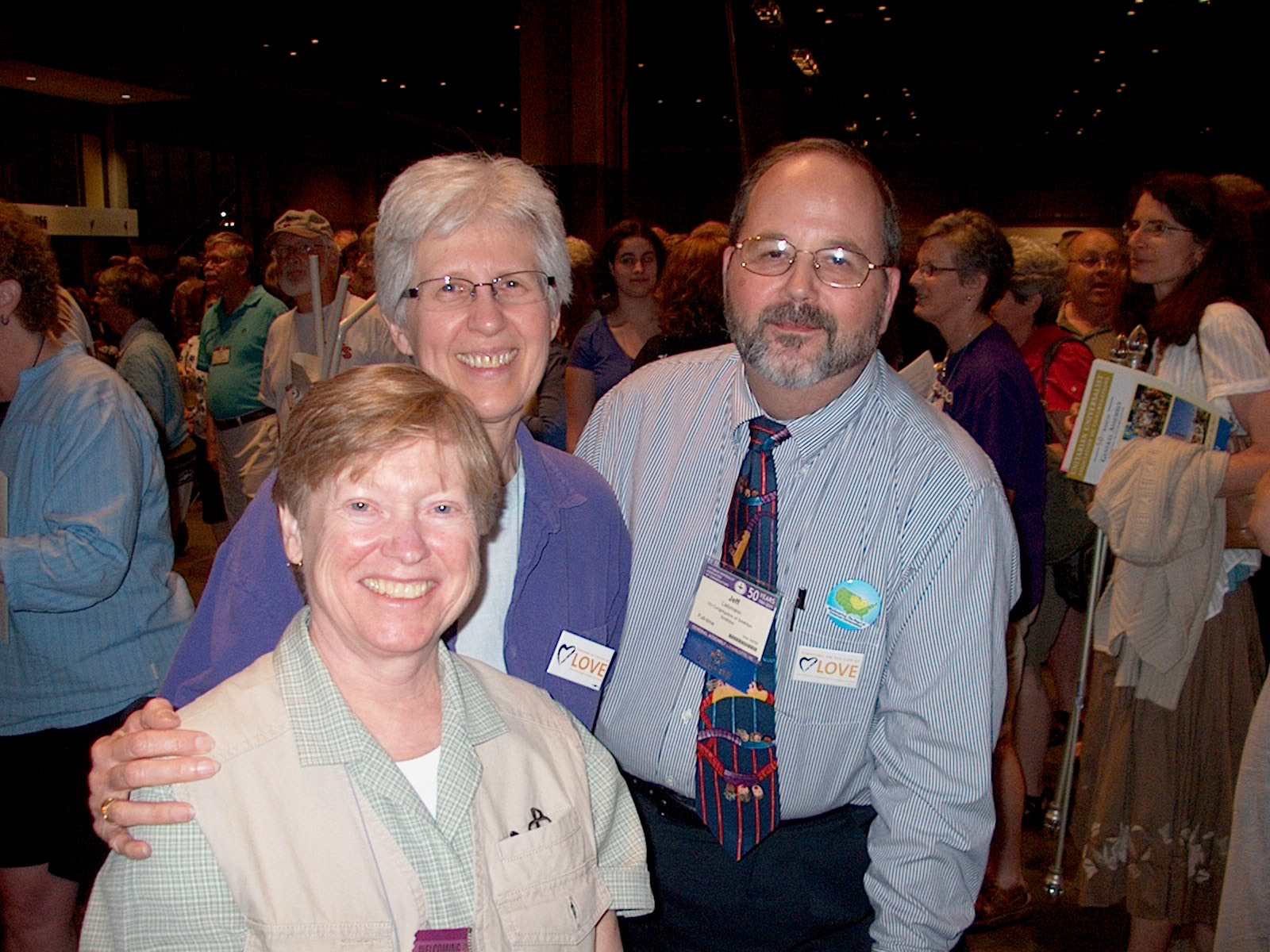
General Assembly: Painful Reminders and the Work Ahead

As joyous as this week can be, General Assembly also reminds us of our failures and mistakes, and of the enormous challenges still lying ahead for us as a denomination.  Many program sessions this week have spoken of declining church attendance and the urgency for our congregations to be more relevant in peoples’ lives and in our society.  One speaker after another reminds us that church cannot simply be about the Sunday morning service, but must be the about the way we live every day.

Today, thousands of Unitarian Universalists and others marched in downtown Charlotte to call people to act against proposed actions before the North Carolina legislature discriminating against gays, lesbians, bisexuals, and transgender individuals, their families and friends.  The rally featured dynamic speakers and members of the broader faith community in impassioned appeal to act for justice.  The gathering reminded me that I must remain diligent in the ongoing struggle of people seeking rights I take for granted, and equal treatment in the eyes of our society.

In the evening, the annual Synergy worship service honoring the passage of our youth into adulthood featured many speakers addressing our history of ministry with youth.  Betty Jeanne Reuters-Ward spoke of growing up in Young Religious Unitarian Universalism (YRUU), and the hurt felt by many when the program was dismantled a few years ago.  As a long-time advisor and advocate for youth, her words brought back that pain for me, as well.  And even though I know bear the full portfolio of ministerial responsibilities, Betty’s words reminded me of the roots of my calling and moved me to once again reach out to our youth and, hopefully, help to heal the wounds caused by our reorganization efforts and our chronic inattention to the spiritual growth of our children and youth.

And, throughout the week, conversations with my colleagues from seminary have reminded me of the enormous challenges facing Meadville Lombard Theological School.  Faculty departures, the sale of our historic campus, and other administrative actions have left many of us feeling estranged from our alma mater and concerned for the future of ministerial education in our denomination.

I love the singing, the hugs, the warmth and caring of dear friends.  But, General Assembly also reminds us that we still have much work to do.  One speaker today discussed the notion that “god” is a verb.  Our spiritual beliefs are not some static bunch of words, or ritualized acts we repeat without further thought or commitment.  Being a Unitarian Universalist is a full-time vocation and every day provides us a variety of opportunities to live our principles, to walk the path to justice, and to reach out to others in compassion.  Every new dawn presents a fresh day for action, for healing, and for love. 

How will you live your faith today?

General Assembly: Traditions

A vital element about attending General Assembly (or any denominational event beyond the walls of our congregations for that matter) is the experience of traditions – rituals that we may not conduct in our own religious communities, but that unite us with other Unitarian Universalists, wherever they call home.  For me, the Service of the Living Tradition is one of the most important of our rituals.

Every year, the Service of the Living Tradition celebrates Unitarian Universalist ministry, particularly highlighting the achievements of fellowshipping, retirement, and the lives of ministers recently passed.  I have worked five years to become a Unitarian Universalist minister, and waited five long years to walk proudly and sing loudly in this jubilant event.

In recent years, applause after each read name was discouraged.  This year, the organizers recognized that in our tradition, the recognition of ministerial authority arises from our congregations.  So, rather than march us to the stage in one unbroken line, this year we all sat among the attendees until our names were called, able to join with our congregants, family and friends.  When called, people were free to applaud, whoop and holler as we rose and walked to the stage.

My adrenaline spiked as I heard my name and leaped from my seat surrounding by the voices of congregants, friends from seminary, and colleagues.  In particular, I was thrilled to have my daughter Ashley and son-in-law Kevin in attendance, who drove from Jacksonville just to see the old man get his “diploma.”  I couldn’t have been happier…joyful…jubilant.  Ashley is carrying my first grandchild, due to arrive for my spoiling pleasure in early September.

There is simply no greater rush than singing Rank by Rank Again We Stand with thousands of Unitarian Universalists.  A tear rolled down my cheek during the Chalice Lighting, and the rest was a blur until the recession.  I walked back through the auditorium, singing at the top of my voice, robe flowing, to For All the Saints.  I then hugged everyone, from former congregants, to fellow ministers, to young adults I have known for many years as advisees and now lifelong friends and colleagues. 

This was a special night that will forever live in my memory.  When people ask me about my call, the work and sacrifice, and living the life of a minister, if you see a little smile arise on my lips, then you will know I am thinking about this celebration, this wonderful Unitarian Universalist tradition.

General Assembly: Reconnecting

The first time one attends General Assembly, the worship services dazzle and the vast array of programs impress.  In my 10th General Assembly, it’s all about reconnecting with dear friends, past acquaintances, and valued colleagues.

During the Ministry Days programs, I chatted with cherished friends from Meadville Lombard Theological School, some still finishing their course of study.  Others, like me, are newly minted ministers facing the challenge of settled positions in new congregations.

Walking through the exhibit hall, I rediscovered fellow curriculum writers at the UU Curriculum and Resource Developers booth and others like my good friend Jennifer who prefers to be called an “extremist” (rather than “fanatical”) vegan and animal rights advocate. 

At the Mid-American region meeting, I ran into long-time acquaintances from youth and religious education work who are now serving as district staff for either Heartland (my new district), Central Midwest, or Prairie Star.  And I found my two on-site delegates from my new congregation, Judith and Sara, from the Unitarian Universalist Fellowship of Midland.  I am proud that we also have two more delegates participating off-site, back home in Midland.

Then, at the banner parade, I met old pals from the Unitarian Universalist Congregation at Shelter Rock, from my original home congregation, the First Unitarian Church of Pittsburgh, and from other miscellaneous travels over the years in UU circles.

Reconnecting with people makes General Assembly special and reminds me of the critical role churches play creating and fostering relationships.  In our modern world, where the focus is so often on individual over community, “me” versus “us,” our religious homes ground us in valuable and often lifelong relationship with others.

Days like this remind me of the origin of the word “religion,” which shares the same root as the word “ligament.  Re-ligio means to bind together again and again.  For me, reconnecting in meaningful relationship is the key to successful congregational and denominational life.

General Assumbly: Ministry Days

I spent most of the morning over my keyboard as my sermon muse arrived early.  I have learned to never ignore her visits, and so dutifully attended until my July 3 piece was completed.  I had a basic theme for this sermon in my head already, an important message since it will be my last visit to my home congregation, the First Unitarian Church of Pittsburgh.  I welcome the opportunity to say goodbye to old friends and long-time acquaintances.  This will also be for me a sort of pre-launch to my new called ministry position in Midland.

In the evening, the ministers gathered together to socialize, worship, and listen to the President of the Unitarian Universalist Association, Peter Morales.  While I do not consider myself much of a social butterfly, these events reunite me with dear friends from seminary – fellow travellers on this crazy path to ministry.  The food was great, the drinks pricey, and I could have done without having a glass of wine spilled on me by a senior colleague!

During President Morales’ talk, one theme struck me again and again.  We are a denomination with an opportunity to grow, to reach out to millions of people in search of our message who no longer find solace in traditional religions.  But, for the most part, congregations are on their own to address this opportunity.  The root “grassroots” arose many times, indicating that we should not expect a lot of help from the UUA in terms of funding or extensive staff support in order to expand programs and reach out to our communities.

While I do not welcome the content of this message, I do accept its honesty.  I very much want to see this religious movement grow in membership and influence on our society.  As a minister, I will be a primary mover and shaker in my community.  But, my principal task will be to encourage, harness, and support my congregants to become ambassadors of Unitarian Universalism.

In the search process, one observation appeared over and over again to me.  Our churches are often fantastic places – if one actually manages to find us.  It is natural that we build loving communities and then work to sustain them, even against perceived threats that new blood might visit upon us.  But, we must shed our fears and address those thousands (I would argue millions) of people out there who need us.  We must open our religious homes to the stranger out there desperately searching for spirituality, for comfort, and for the chance to make the world a better place.

Will reaching out to others change our congregations?  I hope so!  Will we lose what we love so much about our religious communities?  Not if we work with intention, with love, and with commitment to sustain them.  So, while I wish we had vast resources to fund innovative efforts and broad-reaching programs, I accept the challenge laid before us.  The task of changing the world and offering the hand of fellowship to our friends and neighbors is ours to accept or to ignore.  And I vote that we embrace that grassroots challenge.

General Assembly: Arrival

I just checked into my hotel here in swelteringly hot Charlotte.  I swear that the temperature rose 20 degrees as I crossed the border from Virginia into North Carolina.  The drive was thankfully uneventful, although I find myself taking more breaks than in my youth.  Ah, the delights of growing older!

I stopped at a couple of antique malls on the way down and spotted a few more that I will catch on the return trip.  Otherwise, it was a gorgeous drive with one tree-covered mountain after another.  There was a stretch in Virginia where the view was breathtaking.  Even in the slightly overcast sky, I imagined that I could see at least 20 miles into the distance.  There was an ominous looking mountain rising up from the plain, which (being the geek that I am) reminded me of Mount Doom rising from the dark lands of Mordor.  I suppose had it been nighttime, I might have seen the eye of Sauron watching for me.

Official activities do not begin until tomorrow afternoon, as Ministry Days begin for the Unitarian Universalist Ministers Association.  The UUMA events precede the opening of General Assembly each year, and offer a great opportunity to put faces to names and meet new colleagues.

General Assembly is intended to be a business meeting and an opportunity for learning and interaction.  But, for me (and this is my 10th GA), this week has always been about remembering that we are not just individual churches located here and there – a blip on the religious radar of America.  GA reminds me that we are a significant religious movement, a denomination with a storied history and the potential to impact our society still today.

I always return from General Assembly invigorated and loaded with ideas.  As the week progresses, I hope to check in with all of you.  I especially recommend that you check out the live streaming events throughout the week here.  If you can’t be here in person, these broadcasts are the next best thing.

The Unfulfilled Dream

My dear friend and mentor, David Bumbaugh, has written this article, his latest work exploring the dilemma of the lack of a clear Unitarian Universalist message — what defines us as religious people.  As an agitator and self-proclaimed windmill tilter myself (dare I say, a “pre-curmudgeon”), I identify with much of David’s frustration.  I, too, find enormously frustrating our lack of a clear answer to the simple question, “What is a Unitarian Universalist?”

David is correct when he points out that we too often let our fear of offending anybody steer us toward language loaded with ambiguity than fails to clarify or inspire.  But, as David points out, I suspect that his deep roots and prodigious contributions to our movement perhaps influence his perspective and weigh his hopes down with excessive expectations.

As a relatively new Unitarian Universalist (I’ve only been a UU for 25 years), I have no personal pre-merger history that influences my foundational thinking.  And, while I do fashion myself an historian, I believe this discussion depends far more on how we envision the future than the path we travelled to reach the current state.

I think one key piece missing from our equation will help define us as a religious denomination, both to ourselves and to the world.  Like other religious traditions, we interpret great truths; we help people cope with challenge and tragedy; we celebrate joys and life passages; and we educate ourselves and our children about our principles and traditions.  Specifically, however, we must declare boldly and proudly exactly what differentiates us from other religions.

For me, three things clearly separate us from most religions.. I believe that collectively they define us as a wholly distinct religious body.

  • Courage — Unitarian Universalism celebrates individual and collective acts of courage, specifically acts that challenge the authority of institutional power and dogma.  We not only elevate martyrs and people of great accomplishment to pedestals of admiration, but we encourage each and every Unitarian Universalist to do the same.  By holding no individual or congregation to creedal tests, we literally demand of everyone a commitment to crafting a unique philosophy of moral conduct.
  • Reason — Unitarian Universalism places the power of human thought above any sacred text, holy object, tradition, or vow of obedience.  The opinion of no single member of our denomination — be they minister, administrator, or even the President of the UUA — matters more than that of any other.  And, we promote the notion that Truth can be discerned through the application of reason.
  • Universal Love — Unitarian Universalism is not unique among religions promoting love of our neighbors.  We aspire, however, not to pick and choose which neighbor receive that love unconditionally.  This phrase also has the double meaning of portraying our love for our universe, a belief that all of existence is sacred and deserving of our caring devotion.

So, my “elevator speech” in response to the question “What is Unitarian Universalism?” is this.

Unitarian Universalism is a religion promoting the use of human courage and reason in the pursuit of universal love.

For me, that’s it.  No long preambles.  No “whereas” or “be it resolved.”  All of the rest can wait.  All of our principles and sources are covered.

On Memorial Day

When I was 12 years old, my brother Jon went to Vietnam.  The experience was formative for me in many ways.  Other men in my family had served in the military.  But, this was the first time that someone so close to me, someone I loved so deeply, was facing such danger on a daily basis during my lifetime.

Of course, I could have no sense of the suffering Jon experienced, or of the impact that time would have on his life after returning home.  I did know the daily anxiety, exacerbated by nightly news broadcasts of the carnage in Southeast Asia.  I felt the pang of separation with every letter I wrote.  And I felt elation the night he walked in the door, safe at home once more.

Jon brought me a copper bracelet given to him by the Montagnard natives where he was stationed.  He told me that it was a friendship bracelet, that once given should not be removed.  I wore that bracelet for many years, partly because it was the one tangible way I could share my brother’s experience of war.  That bracelet helped me imagine that there were real people over there that he had helped.

On Memorial Day, I join others honoring the enormous sacrifices of our veterans.  I especially hold my brother Jon in my mind, because I know that he paid – and continues to pay – a great price for his service to his country.  I owe him and those thousands of other vets a debt of gratitude for their sacrifice.

I also honor the sacrifices of the families and friends of veterans – the parents, brothers and sisters, spouses, children, and others – who waited, sent packages, prayed, and kept the dream of home alive.  And, while I hope for the day when we never need to take up arms again, let us always keep strong our will to support those who sacrifice for the good of others and never forget their dedication to preserving our freedoms.

One More Death for Peace

Relieved, disgusted, hopeful, anxious, confused.  I felt these and a host of other emotions Sunday night as I heard the news of the death of Osama bin Laden in Pakistan.  I felt relieved that this inglorious episode in my nation’s history might finally draw to a close.  I felt disgusted at the hordes of people publicly rejoicing at the death of another person, no matter how deserving that person may have been of stern justice.  I felt hopeful that, rid of its greatest advocate for chaos and violence, the world might begin to heal from the wounds of recent decades.  I felt anxious that the remnants of bin Laden’s machinery might react in unexpected new acts of mayhem against innocent men, women and children.  And I felt confused, not knowing exactly how I should be feeling at this moment.
Evidence would indicate that Osama bin Laden willingly established himself as an enemy of order, reason, freedom and democracy.  He advocated violence over diplomacy and chose to murder noncombatants indiscriminately in his war against the United States and its allies.  Of course, as history repeatedly teaches, the philosophies that generate such fanaticism rarely develop in a vacuum.   In ways small and large, we are all complicit in the global systems that create movements such as al-Qaida.
I read one newspaper account that labeled current efforts to oppose these transnational military organizations as asymmetrical warfare.  The pace of change in the ways humanity chooses to murder itself change faster than societies can ever hope to keep pace with them.  So, as we celebrate another death occurring in the name of peace, I pray that we look forward to a future without war by any adjective.  How can we hope for such a future?
  • As individuals, identify and own the ways in which we contribute to the oppression and objectification of others, and commit wholly to the loving unconditionally.
  • As communities, set aside false “us-them” dichotomies and recognize that achieving our human potential requires patience, acceptance, cooperation and understanding.
  • As countries, make human welfare and happiness our highest priority over the acquisition of wealth and the use of power to impose our social, economic and political will over others.
  • As humanity, respect the worth and dignity of all people, including their right to determine their own way of life, as well as our responsibility to answer others’ calls for humanitarian assistance and to sustain their basic human rights.
  • As a world, explore ways to survive and thrive on this planet sustainably.
  • As one mote of star stuff in a vast universe, open ourselves to experiencing the wonder and mystery of all existence, seeking out cosmic truths that rise above the boundaries of planet, species, nation, tribe, and body.

A Pre-Mothers Day Observation

I consider myself a fairly organized person.  But, I never quite know where my muse will take me when I write a sermon.  Nearly finished with my Mothers Day message, I decided to take a break and walk down by the railroad tracks.  The trees finally budded out of their winter slumber.  And birds chatted their differing songs the further I got from the road.   I watched the water in the river and soaked in the sun.

Just as you often see alongside highways, one commonly finds animals along the tracks hit by trains in the night. I came across a muskrat, another victim of a passing locomotive. The body was recently dead and I noticed a small, unborn baby muskrat in the tangled remains.   I shook my head at the grim discovery and thought, “Oddly appropriate that I find this poor animal as I write my Mothers Day sermon.”  I reflected on this fresh reminder of the emotionless process of evolution in nature weeding out the weak so that the strongest and smartest live on.
I suddenly heard the crunching of gravel and looked up to see an older man walking along the tracks behind me.  We exchanged greetings and I told him I had never run into anyone else on the rails before.  He asked, “wasn’t it terrible about that young girl?”  After a second, I realized that he was talking about a 15-year old who had been struck and killed by a train last December.  He went on to explain that we were standing where the accident had happened and, from the details he provided, I imagined that he could have actually discovered the body.
We talked a little more, and then he moved on.   I stood staring at the spot for some time, and a deep sadness came over me.  Sadness for Erika Stefan’s family and friends.  Sadness for the conductor faced with the impossible task of stopping a train or alerting the girl wearing earphones and unable to hear his warnings. Sadness for the mother and grandmother, wife or partner, the woman that Erika Stefan would never become.
I finally crossed the tracks.   Unable to reach blossoms on trees up the steep incline, I broke off a small budding twig.  Dropping it on the tracks, I said, “Little one, wherever you are, I hope the universe treats you more kindly.”  And I began the walk home.
As I walked, I thought about what I could say as a minister to a parent who loses a child, especially under such tragic circumstances.  As the conversation went through my mind, a monarch butterfly flitted towards me. And as it passed, a voice inside said, “It’s alright…everything is going to be OK.” I turned as the butterfly winged passed, and found myself asking, “Is that you, little one?”  The monarch just continued on past in the direction from which I had come.
I realized at that moment that Erika Stefan will never be the mother of her own children.  But, for one passing moment, this young girl mothered me.  She comforted me in my sadness, and reminded me that death really just represents a transition of one state to another.  The universe comprises an inconceivable amount of star stuff and we are all made up of that same material that existed four billion years ago at its very beginning.  Little 15-year-old Erika reminded me of the interdependent web of all existence of which I am a very tiny part.
There are times when I wish I could just take a walk and have it be just a walk.  But, I guess the universe just has too many stories it wants to tell me.