I loved the ABC television series “Lost.” I found the mystery and non-linear storytelling refreshing in a cinematic world of derivative and predictable plots. This series introduced many notions: (1) Life can be unfair for no particular reason; (2) everyone has “evil” and “good” within them; and (3) Love is ultimately the only pursuit that can provide us fulfillment and meaning.
In the past few years, I contemplated long hours about the state of our world, our nation, and Unitarian Universalism in particular. Our nation teeters on the brink of civil war. A huge portion of Americans place belief in a cult above collective morals and rationality. For years, I have warned of the coming kakistocracy (from the Greek meaning “rule by the least competent), and we seem to have reached that undesirable stage.
I believe America is lost. If true, how do we find our way? I feel that churches can help us in that quest. Despite seeing some horrible human behavior from congregants, I have faith that a church can provide us guidance and help us rediscover our direction. I always felt that Unitarian Universalism could be the conduit for such a church. Frankly, however, my faith in our movement rests at an all-time low.
In a recent online conversation, one reason for my despair formulated itself clearly. When you ask Unitarian Universalists what they value most about church attendance, their top answer is almost always “community.” This makes sense, in that community is the one spiritual activity that a church can provide that individuals cannot provide on their own. Anyone can read sermons, teach their children religion, experience moving music and art, perform social justice, and a host of other functions that a church can provide. But, community is one element intrinsic to a church that would be difficult for an individual to attain and keep for long in their spiritual life.
Somewhere along the way, however, we got lost interpreting these survey results. We went from the conclusion that “community is the most often cited function of a congregation” to “community is the most important function of a congregation.” While this is an easy mistake to make, the consequences of this miscalculation may eventually be fatal to our movement.
To understand this concern, we need to ask ourselves the question, “What is the purpose of church?” Obviously, there are many answers. One of those answers is, indeed, to provide community. But, for what purpose? Any human organization can provide community. The church, however, is uniquely situated to provide community that assists individuals in the pursuit of their spiritual goals on a multitude of paths. In a church, we can explore grace, experience awe, revel in mystery, or parse existence intellectually – all within the context of worship and religious purpose. Again, we can pursue all of these as individuals. A church can facilitate the task by making the quest more manageable, by validating our efforts, and by providing some tools and techniques to keep us from getting lost.
When church becomes a social club, however, we lose sight of its religious purpose. When service in a church becomes more about power and control, we lose our appreciation of true sacrifice and humility. And when accountability is missing, then the church community gets lost in the corruption of human weakness and stays from the path of human enlightenment.
 In 1933, Adolf Hitler rose to power after being elected by the masses of disenfranchised Germans. Through intimidation and direct violence, he quashed opposition. Cloaking himself in a simplistic narrative of the German volk and virulent hatred of minority populations, he bullied his way into power. Then, with another election imminent, he kept power through a massive distraction – the burning of the Reichstag building (the German equivalent of the U.S. Capitol).
 The Reverend A. Powell Davies accepted the pulpit of All Souls Unitarian Church in Washington, D.C. in 1945. Living in Washington showed Davies first-hand the realities of segregation. He began by getting his own house in order, for while African-Americans had attended All Souls over the years, they were not welcomed as full members until 1950. He pressured the Police Boys’ Club No. 10, housed at All Souls, to integrate. They refused and ended their relationship with the church. Davies then helped create the racially integrated Columbia Heights Youth Club.
 After I finished my ministerial internship, I took a half-time contract position at the Unitarian Universalist Congregation of Smithton PA. Looking back, this was perhaps my happiest time as a minister.
 This question was posed to us by David Bumbaugh, who I consider the wisest teacher I ever learned from. He spoke with sadness that the compelling faith of Universalism died with the merger and that the ensuing new denomination never articulated what he called a “saving message.”

 We have all seen pictures of “the wall.” Usually, the pictures are taken in isolated desert areas with no sign of nearby human activity.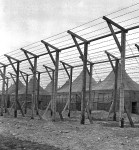

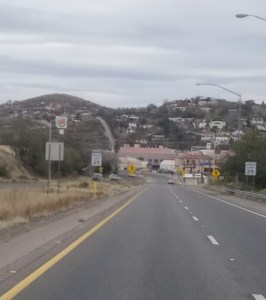 Nogales should be a unique and attractive city. After miles of relatively flat desert and mountains in the distance, you enter on Interstate 19, and are suddenly faced with hills covered with homes of many styles. It is a vertical city without the benefit of skyscrapers.
 Nogales should be an attractive city. But now, Nogales is a wounded city. A horrible gash splits the American and Mexican cities and a militarized gate makes passage between the two a burden, even a danger. The lumbering monstrosity dominates the landscape, looking for all intent making each city look like a prison.

 Migrants entering the United States face an incredible array of personnel and technology. Beyond the standard local police, county sheriffs and U.S. marshals, they must also evade the Border Patrol.
 And what does it take to become a border patrol officer? A six-month course (only recently expanded from three months) and passing a test.
 Rev. Jeff's Muse Kennel and Pizzatorium