“…it simply is not true that one can believe anything and be a Unitarian. This is not what creedlessness means. One cannot be a racist and a Unitarian; be a Nazi and a Unitarian; a polygamist and a Unitarian; a bigot and a Unitarian. In our zeal for growth, we must not sacrifice the character of our movement as a rational, idealistic, ethical religion. Everybody is not, and cannot be a Unitarian regardless of their unethical behavior or prejudicial beliefs.” – A. Powell Davies
In all the years since the merger that created the Unitarian Universalist Association, one issue remains constantly at the forefront of our unaccomplished vision. Year after year, we failed to adequately address institutionalized racism in our own churches, let alone in the world beyond our walls. The irony is that we know the causes – privilege and whiteness. The tragedy is that we have not yet developed the communal will to tackle these causes. Our goal of affirming the inherent worth and dignity of every person will remain beyond our grasp until we destroy these pernicious attitudes.
Many in our ranks work with great dedication toward this end. Some of our ministers and lay members represent models of allyship with People of Color. However, the vast majority of Unitarian Universalists remain unengaged in anti-racism and anti-oppression work. Like most of our social justice causes, we gently encourage members to educate themselves; we create painless ways to help ourselves feel like we are contributing to the greater good; and we provide a modicum of support to organizations committed to the cause. In the end, however, our commitment as a faith body to erase racism is tepid.
Every time another young Black man or woman is murdered by the police or some heartless “stand your ground” zealot, we wring our hands and opine at the scope of the problem. And yet, the solution is not only obvious, but one we have done before.
 The Reverend A. Powell Davies accepted the pulpit of All Souls Unitarian Church in Washington, D.C. in 1945. Living in Washington showed Davies first-hand the realities of segregation. He began by getting his own house in order, for while African-Americans had attended All Souls over the years, they were not welcomed as full members until 1950. He pressured the Police Boys’ Club No. 10, housed at All Souls, to integrate. They refused and ended their relationship with the church. Davies then helped create the racially integrated Columbia Heights Youth Club.
But his most significant contribution came in 1953, when Davies launched a successful city-wide campaign to patronize only those restaurants that would serve all people regardless of race. In his wonderful biography, George Marshall quotes Davies from his February 1953 sermon:
Suppose we said this – “I do not believe in segregation; it is unjust, unrighteous, unbrotherly; I intend to do what I can to end it.” Well, that is our intention, a good intention, and it makes us feel like fine people. We are very happy, very warm with self-esteem, and very safe within its shelter…Suppose we should say, “I will not eat a meal in any restaurant that excludes Negroes.” Suppose we said further, “I will make it known to the managements of such restaurants.” We might feel rather odd – and we might have to eat in unaccustomed places. Our friends would raise their eyebrows – not much, but just enough for us to notice it. “Isn’t that going a little far?” some of them would ask. Which it surely is. Because it is carrying a good intention to fulfillment…If America is to be a righteous nation, worthy of the greatness of its opportunity, it must come through righteous deeds, not lofty talk.
Davies then made that commitment and called on the 1000+ members of the church to follow his example. This call to end segregation in restaurants, hotels, and other entities spread across the country.
The time is long overdue to continue this work, to carry our good intentions to fulfillment by attacking not only the effects of racism, such as segregation, but its root causes. We must take our lofty words and resolutions and turn them into denomination-wide actions that are not merely suggestions but mandates of a people of faith. For you cannot be a Unitarian Universalist and a racist.
That means every one of us commits to understand and accept the role of privilege in our lives and to act and sacrifice to dismantle its effects. Every one of us must stand against white supremacy is all of its forms, and drive the bigots from positions of power and influence. We must defend victims of race-based violence as our brothers and sisters. And we must pursue a realignment of social priorities in order to eradicate poverty and provide basic human rights for all people, especially if that means sharing the wealth we obtained through the fruits of privileged birth and station in life.
This is not a creed. This is a test of our faith.
Let us resolve to take this opportunity afforded by the social effects of pandemic to reshape ourselves, our churches, and our society; to right historic wrongs; and to achieve the our dreams of equality, fairness, and justice.
 After I finished my ministerial internship, I took a half-time contract position at the Unitarian Universalist Congregation of Smithton PA. Looking back, this was perhaps my happiest time as a minister.
 This question was posed to us by David Bumbaugh, who I consider the wisest teacher I ever learned from. He spoke with sadness that the compelling faith of Universalism died with the merger and that the ensuing new denomination never articulated what he called a “saving message.”
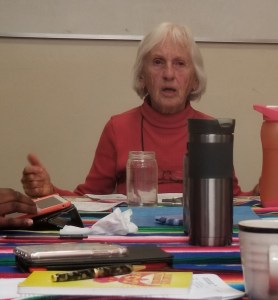 This morning, we met Lois Martin, an 84-year old who moved to Tucson 10 or so years ago to work on immigration justice. She is a member of
 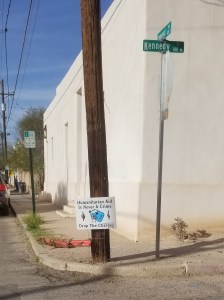 Only after the hearing are migrants remitted to immigration services, where claims of asylum may be heard. But, often the only person who may hear the claim is the bus driver taking them to Nogales, or an officer who simply chooses to ignore it.
 People marched for many reasons. They marched for equal rights for women, People of Color, immigrants, LGBTQIA individuals, and others. They marched for our planet, recognizing that human action harms our global climate. They marched for a fair and just society that truly offers complete access to the American Dream for all.
 Even when women take every possible precaution, this pernicious double standard too often produces pregnancies where the men bail out and leave the woman alone to bear a life-long responsibility with little if any support. The legal system does little to hold men accountable as equal partners in procreation, but hurdles mountains to control a woman’s body and medical choices.
 For years, Congressman John Moolenaar has staunchly defended what he calls the “sanctity of life.” This week, Harvard researchers revealed that the repeal of the Affordable Care Act without a replacement program will result in 44,000 unnecessary deaths each year. It is irrefutable fact that more than 20 million Americans will lose their health insurance if Republicans repeal and do not replace the ACA, an action Moolenaar voted to approve.
 If you opposed the march last Saturday, I implore you to look at the broad picture of what it means to be an American citizen. Standing up for the rights of those who cannot defend themselves is courageous, noble work. But the defenseless include not only fetuses, but refugees, children of undocumented parents, innocent people dead due to excessive police violence, and victims of institutionalized racism, gender bias, homophobia, and other forms of bigotry.
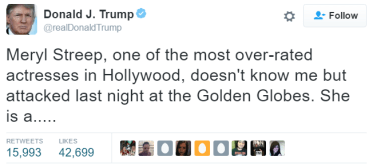 1. Think. Our mothers taught us, “If you can’t say something nice about someone, then don’t say anything at all.” We Americans can be obnoxious, even rude. But, we look up to the Office of the President largely because it stands for the highest level of decorum and class in our society. Our President should be better than us, and should model for us the best human behavior. We all understand the satisfaction derived from beating someone in a war of words. But, we need our President to rise above personal pettiness and insulting retorts in response to criticism.
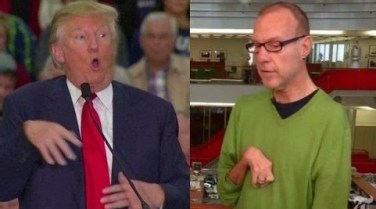 We need you to love every Black man looking in the rear view mirror at the flashing lights of a police car; the woman entering the Planned Parenthood office for a cancer screening because her insurance won’t pay for her to go to the local hospital anymore; the young gay man cast out of his parent’s home because of who he loves; the woman wearing the hijab being berated for her religious beliefs; the man publicly mocked for his congenital disability; the mother living in her car because her employers pay poverty wages; and the hard-working, courageous man seeking the same American dream for his children that our own ancestors sought.
 Near the end of his ministry, Jesus demonstrated that we cannot achieve justice passively, and that we must sometimes meet oppression with active resistance. Jesus entered the temple and drove out all who were selling and buying…he said, “My house shall be a house of prayer, but you have made it a den of robbers.”
 Rev. Jeff's Muse Kennel and Pizzatorium