Simple Joys of Days Long Gone

Thoreau I ain’t.  But I do like the occasional walk through the woods…along an established trail…of a known and manageable distance…as long as the bugs aren’t too annoying.  I am far more inclined toward B.F. Skinner’s Walden Two than its namesake original.

But I can appreciate nature as well as the next urbanite, so I sauntered off into the untamed wilderness of the Potawatoni State Park forest for a 1.7 mile adventure.  The first surprise was the enormous racket.  From the incessant chip-chip-chip of quite possibly thousands of chipmunks to the munch-crunch of squirrels rotating acorns in their dainty paws, to the blaring warnings of geese aimed at flying interlopers, a cacophony of sounds surrounded me.  Not the least alarming was the occasional thud of a heavy-husked black walnut pummeling its way through the branches.

I wandered up and around the toboggan run, down past a playground and into the Nature Center.  Inside I found a nice collection of turtles (sadly they were missing my favorite spiny softshells from my recently departed Youghiogheny River walks) and a wonderful viewing window displaying a bird feeding station just outside.  Flittering all among the dozen or so stations were sparrows and finches, woodpeckers and nuthatches, and of course the perennial mourning doves.

I continued on down a now less thoroughly paved path back toward the Inn.  I am always amazed at how our minds over time are so apt at categorizing sensory inputs.  I recognized every creature as I spied or heard it rustling through leaves or announcing its presence as I approached. 
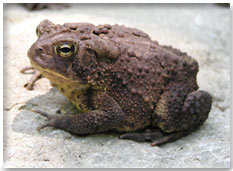
Suddenly, I spotted out of the far side of my vision an unusual hopping motion.  I stopped and turned, hoping to determine more accurately its location and cause.  After I few seconds, I saw the hop again and spied a toad.  I imagine it was your basic American Toad, living across lots of states.  I found myself instantly whisked back through time to my childhood, when such finds seemed endlessly plentiful and tirelessly exciting.  I honestly could not remember the last time I saw a toad, but I distinctly recalled the joy I experienced when I discovered them as a child.  I fondly reclaimed memories from deep in my mind’s archive of holding their warty, cold bodies in my hand.

I wondered if everyone, no matter how challenging, stressful, or simply awful their youth has similar memories – simple delights that bring smiles to faces and carry away concerns and fears.  I certainly hope so.  I fervently hope that everyone has some trigger back to a time in their lives that was relatively free of cares and scares, of anguish and pain, of loss and betrayal.  I hope you can take a moment today – perhaps even every day – to saunter someplace in your mind where a toad sits waiting for your curious finger to stroke its smooth, bumpy skin.
Does It Get Better?

The It Gets Better Project specifically addresses the question many LGBTQ youth have when they experience bullying and discrimination.  Does this ever get better?

You don’t have to be LGBTQ to ask that question.  You may find yourself in a job that seems to be going nowhere.  Your relationship with parents, children, or significant others may be mired in seemingly endless cycles of misunderstanding and hurt.  There may never seem to be enough money, no matter how hard you save or cut expenses.  It may seem that only destructive behaviors are able to alleviate the stress of your everyday life.

Does it ever get better?

The simple answer is yes, usually things do get better.  But, the complicated answer is that we are human beings – flawed and imperfect.  We live in a world that is unpredictable, filled with random noise and chaos.  And anyone who tells you that life is fair is trying to sell you something.

Does it always get better?  No.  Does it get better and always stay better?  Probably not.  Given the reality of life, then, you may ask yourself, “Why bother?”  You should bother for one simple reason.

TANSTAAFL.  Readers of science fiction writer Robert A. Heinlein know this acronym.  TANSTAAFL means, “There ain’t no such thing as a free lunch.”  In other words, the only things worth having in life only come to us through hard work and sacrifice.

Can we go through life without risk, without taking a chance?  Sure.  And in America, one can quite possibly live a perfectly satisfying and safe life without taking that leap of faith, without jumping off that cliff.  But, you won’t achieve the really great things, the “wow factor” in life without commitment, sweat, and compromise.

And compromise is a big one.  By compromise, I don’t mean selling your soul or abandoning your principles.  Compromise means negotiating and constantly renegotiating our covenants with each other – what we promise to others and how we will treat each other.  And in order to compromise effectively, you must identify what matters most to you in life, the things that are non-negotiable.  Everything else is on the table, because in the end, the rest really doesn’t matter as we pursue our goals.

The rest doesn’t matter because all of the really important goals involve other people.  I can’t be the best at my profession without clients for my services.  I can’t be an effective parent, child, or sibling without family and committed partners to make the journey with me.  Unless I seek the life of an ascetic, I cannot be truly happy alone, and no drug can give me that happiness.

Identify priorities, work hard, and compromise.  They will not guarantee success, but they will certainly improve the likelihood that you will achieve your goals, and will certainly make the effort more fulfilling.

Truth and Spontaneity

This morning, I attended a meeting of my cluster ministers, an important part of building collegial relationships and, quite honestly, staying sane.  We began the day with a worship service, which was about excellence.  At one point during the sermon, the leader looked at me and suddenly asked me what I viewed as my strength.

Now, almost any other time, I might have had several answers to that question – answers that I have considered over years of discernment and many hours of reflection.  I am a preacher, teacher and lover of knowledge.  I am a boat rocker.  I am a paradigm shifter.  I am a facilitator and guide.

But, none of those carefully constructed answers came to my mind.  Before I could even begin to think about what I should say, I said, “Being a parent.”

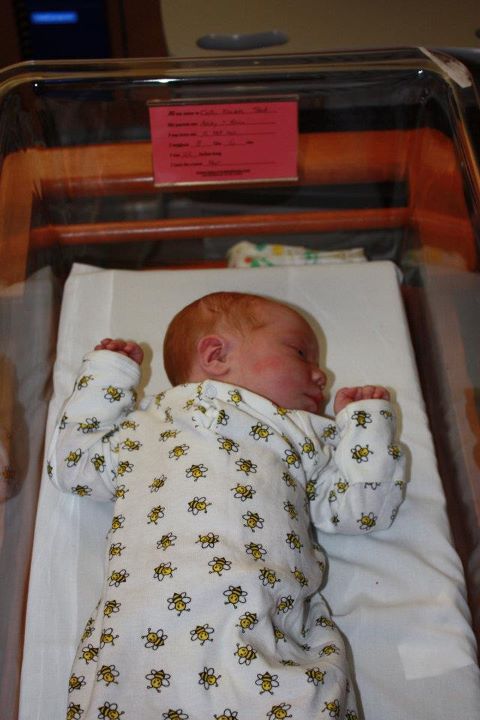
Obviously, the events of the past week likely influenced my answer.  My daughter Ashley and her husband Kevin made me a new grandfather of a lovely baby girl, Caitlin Elizabeth Stack.  And my son Tyler got a richly deserved promotion, a just recognition of his hard work and dedication.  It was a banner week for the Liebmann clan and I could not be prouder.  So, I could be excused for having my kids at the forefront of my thinking.

But, I think my spontaneous answer revealed more than I might have suspected.  I was blessed to have tremendous parents and I strove to be the best parent I could be.  And clearly, many parenting skills come in handy in ministry, not to mention many pursuits in life.

  • A good parent teaches, but is just an avid a learner.
  • A good parent knows when to talk and when to listen.
  • A good parent leads by example.
  • A good parent is on the clock 24/7/365, but also knows how to have fun.
  • A good parent provides opportunities for success and can turn any failure into a teaching moment.
  • A good parent loves unconditionally.
  • A good parent fosters creativity, rewards imagination, and welcomes a challenge.

So thanks Mom and Dad.  Thanks Ashley and Tyler.  Thanks to everyone who has helped hone my parenting skill set.

Waiting on a Delivery

I sit here, cell phone in hand, waiting for a call. My daughter is now several days passed her due date to deliver my first grandchild and my anticipation is massive. I hate waiting.

But, I love deliveries. I gleefully go to my mailbox every day. My email accounts remain open constantly. I am even a glutton for the immense noise of Facebook updates.

So, this “package” weighs heavily on my mind. While the pressures on a PGK (Preacher’s Grand-Kid) may be mild, I do feel a special responsibility for contributing to her spiritual growth. My own children did not grow up with a minister for a father as I entered the clergy after they set out on life’s adventure as adults. But, this child will grow up with my ecclesiastical influence (albeit from a distance).

I have already dutifully provided some appropriate books for the nursery. And, beyond doing my share of grandfatherly spoiling (that is our primary job, after all), I do expect to plant the seeds of religious thinking in her developing mind.

I realize, however, that the most effective way of influencing others is simply by being the best person I can be myself. And, I must satisfy myself that if I do the best I can as a person, then a little of that will rub off on her. It will take many year, perhaps a lifetime.

I hate waiting.

Crickets in the Basement

The other day, I was reminded of my Unitarian Universalist evangelicalism by a strange sound coming from my basement.  Standing in the kitchen, I heard something I should not have been hearing inside my house — a loud chirripping from the floor below.  Going down the stairs, the sound was so loud, my ears had difficulty locating it.  A cricket had somehow found its way in and was making its presence abudantly known.

My first thought was that you have picked the wrong place to seek out a lady cricket.  I wondered why the insect would make such a racket, lost in such an unfamiliar environment devoid of familiar plants and night air.  Perhaps it was just sending out sounds like sonar waves, trying to discern its location.  Perhaps it was angrily railing against the misfortune that carried it into a barren land, devoid of friends or food.

More than likely, I then thought, the poor thing is probably just calling out for help.  Panicked, the solidary creature was literally “screaming” for help in the chance that Providence would restore it to its rightful home.  I couldn’t help but wonder what the tiny bug was thinking of the books and boxes, the carpet and closets.

My mind couldn’t help but wander to all those people out there, lost in unfriendly circumstances, lacking friends and familiar surroundings.  Walking down the street, is the woman I just passed screaming silently for someone to help her?  Is that young man desperately reaching out figurative hands pleading for someone to crasp hold and pull him from his hole?  How many helpless, hopeless persons out there are crying out however they can, praying for their world to make sense.

Our congregations are often wonderful places and those who find their way to our doors are very often rewarded with deep fellowship and lifelong guidance along their spiritual paths.  But how many never see our buildings or hear our messages?  How many never smell the pulpit flowers or feel the touch of a helping hand pulling them toward sanctuary?
The world is filled with crickets in the basement, desperately trying to find a way home.  This coming Sunday is Homecoming for many of our churches.  Our congregations can help people deal with all the noise of their daily lives.  So, listen for the chirps in your life and invite someone to a worship service.  In their own ways, so many people are hoping they will be noticed and offered a hand of fellowship.  A basement may not be a dangerous place, but it is devoid of sustenance and leads nowhere.

Extreme Welcoming

In my travels among different congregations, I have found many healthy, happy churches.  Unfortunately, finding them often takes a good deal of work on the part of the searcher.  We have many wonderful religious communities in our denomination.  But, too often we make the task of locating and entering those communities onerous.

The consequences of our inattention to outreach ministry was struck home to me last week when I attended a local folk music festival.  The odyssey started with driving to the fairgrounds and entering one of the two main entrances.  I shortly found myself facing a barricade with no indication of exactly where I was supposed to park my car.  After crawling around two such obstacles, I found a grassy area with cars and stopped.

Seeing no obvious starting point for the event, I walked over to the main building.  Inside I found an information table and some vendors selling instruments and music.  However, there was no starting place and no obvious location for the visitor to talk to someone about the schedule of events.  In fact, quite the opposite, no one spoke to me, offered assistance, or even said hello.

I walked around the room and was again astonished at the lack of interaction or interest in my presence at all.  When I did talk to people, their interest waned quickly when the realized that I was not “one of them.”  And although the posted information indicated that food was available, I found nothing but one small table selling bags of popcorn.

The event could have been very interesting.  Perhaps the group might have engaged me in what could have become a long and fruitful relationship.  Instead, I doubt that I will ever have much interest in the organization or its events again.

It saddens me to think of the many times I have heard similar stories from people visiting our churches.  Knowing how I felt that day, I would never wish that feeling of unwelcome on anyone, particularly someone looking for a religious home.

So, while you may be perfectly happy with your own congregation, take a moment and examine it through the eyes of a visitor, a stranger.  How welcome would you feel?  How would you want to be treated upon entering the space and in the days after?  Are the things you would want really all that extreme, or simply practices that should be commonplace?

Some Assembly Required…

That’s a phrase every parent has dreaded at one time or another (especially at 4:00 a.m. on Christmas Eve as the bicycle lies strewn in uncooperative pieces on the floor).  Lately that phrase has run through my mind as I construct my new life here in Midland.  From the metaphorical (assembling new relationships with congregants and a new town) to the literal (a desk, three bookcases, an office chair, and a still-not-quite-functional filing cabinet) my life lies in pieces on the workbench waiting for Geppetto to assemble the puppet who would be a boy.  I’ve put together quite the collection of Allen wrenches and instruction manuals.

As much as I like to receive packages, I am beginning to yearn for some end to the chaos.  Something in me wants at least one room in my life to be finished.  Just once, I want to look around me and be satisfied.  As one of my favorite movie bad guys once said, “When Alexander saw the breadth of his domain, he wept for there were no more worlds to conquer.”

The real problem, though, is believing in the illusion of completion.  There really is no such thing as being finished with anything.  Just as the elements that comprise our universe are in a constant state of flux, so our lives consist of an endless stream of shifts and changes.  I suppose if I ever got everything that I think I want, I would immediately identify some new desire or place for improvement.  I’ve come to believe that enlightenment is not a stagnant state of serenity and wholeness, but rather an attitude that nothing is permanent and that no current state of anything really matters at all.

In the meantime, I’ve got piles of unsorted books beckoning for my attention, a sad recliner due to fall apart suddenly as I sit to watch the next episode of Hell’s Kitchen, and a garage full of shipping boxes awaiting the next “heavy item” garbage pick up day.  Until I achieve a transcendent state, I will seek that balance between the nirvana of the perfect home and a disorganized and unmanageable hovel.  And I will continue to embrace the many opportunities before me to assemble my life.

Floating Logs in the Stream of Life

Before my move to Midland, I took one last walk south along the railroad tracks out of Smithton toward Jacob’s Creek.  The summer temperatures had fallen, but the air was still muggy and warm.  I went to an opening along the bank where people launch kayaks and canoes to drift along the Youghiogheny River.  I have sat there before watching the water flow by, but the log I had used before to sit comfortably was nowhere to be seen.  Doubtless some camper tossed it onto a fire not knowing they were depriving me of my resting place.

So, I wandered along the fishermans’ trail, tossing branches and stones into the water.  Unable to find a place to sit and rest in solitude, I grew restless and unable to allow my mind to wander unfettered.  I headed back along the road.

I soon came upon an old, partially-rotted piece of wooden guard rail post.  Still close enough to the water, I tossed the semi-log in.  It hit the surface with a low plomp, sank, and quickly resurfaced.  In no time, bulky block of wood sped along with the river.

Now walking with the current, I found that I could easily keep pace with the floating wood.  With its large exposed surface, it reminded me of a Mark Twain raft drifting along the mighty Mississippi.  I started gaining ground and stayed paces ahead as I walked.  Occasionally a car would pass by, forcing me to hug the guard rail and check up on my small ark.

Watching the steady progress, I thought of my kids as they grew and went off into the world.  Had I wanted to, or really needed to, I could have lumbered down the bank and jumped in to retrieve my child from the current.  But in reality, I was consigned to watching its inevitable journey, knowing that I had provided the initial impetus and castoff.

As the foliage grew taller, I only caught fleeting sight of the floating log until the weeds grew too high.  At the same time, the road started to dip slowly away from the water, and I knew that ever a herculean effort would not rejoin us again.  I began to imagine its future course down the river, knowing that I could do nothing to influence its path significantly.

Returning home, I couldn’t help but think of all the times in our lives that we give birth to activities and ideas and how soon they develop lives of their own, quickly moving out of our control.  When theologians talk about the cycle of birth and death, they often only include consideration of salvation of the individual or the progress of the soul along the path of reincarnation.

But, in fact, our lives abound with little births, giving rise to lives – some fleeting and others carrying on long after our own demise.  More often than not, we are completely unaware of our continual creations and the impact they have on others.  Perhaps a respect for the interdependent web of all existence begins with such awareness.

My Life as My Books

I don’t suppose a therapist would classify this an addiction, but I am inordinately fond of books.  Having just moved to a new home in Midland, I find most of my time consumed by organizing books, buying shelves for books, and grieving the loss of a handful that fell victim to a spill in the moving van.

People ask why I want to possess so many books.  Why do I keep books I have already read?  Why do I buy books easily available in libraries, even online?  And why would I keep a book that I am entirely unlikely to ever read?

I will admit that my bibliophilia borders on the obsessive.  I do use libraries liberally and love the growing availability of documents on Google Books and other resources.  Logic certainly would not explain the contents or size of my personal collections.

But, there are reasons for my madness.  I am comfortable around and among books.  Sometimes I feel smarter or more insightful just knowing that all of that collected knowledge resides in immediate proximity.  There is an art to the library, from dust jacket illustrations to bindings.  And, the symmetry and line of rows of texts appeals to my design sense.

The primary reason for my peculiar compulsion, however, is how my books help my spiritual practice.  Just as I love to saunter along streets and pathways, I also love to walk among ideas in my mind.  I cannot count the number of times a worship service design changed direction after a casual glance at a neighboring book, or the coincidental discovery of a text related (often in an obscure way) to the subject of my sermon.  I know that virtual libraries will in time replace my beloved stacks.  But, I will miss wandering among the towering shelves of Dewey-decimalled dusty tomes.

General Assembly: Opportunities

This amazing week of talking, singing, listening, and worshipping continues here is Charlotte.  Yesterday, we heard a number of reports during the Plenary sessions that gave me great hope.  Both reports gave me tasks to pass onto my new congregants at the Unitarian Universalist Fellowship of Midland as possible new initiatives.

During his report on the activities of the UU-UNO (Unitarian Universalist United Nations Office), Bruce Knotts related the enormous impact we have in that body.  From women’s rights, to the safety of children, to the protection of LGBT individuals, Unitarian Universalists are at the forefront of United Nations efforts.

Our office in the UN works with a network of congregational representative network of Envoys.  Envoys connect the congregation to the UU United Nations Office and get important information on current UN activities.  They receive information on our program initiatives and then plan events in their congregation to promote the program.  Envoys are extremely valuable to the UU United Nations Office because they are the link between the office and the global UU community.

As someone committed to the work and purposes of the United Nations, I hope to enlist someone in my new congregation willing to serve this important function.  Being connected to the United Nations is one important way to stay in touch with the entire world, bringing our message to people everywhere and helping people in need or whose rights are being abused.

In another report Bill Schulz, former President of the Unitarian Universalist Association and subsequently President of Amnesty International, reported on new initiatives being undertaken by the UUSC (Unitarian Universalist Service Committee).  As Schulz powerfully articulated, the UUSC is involved in basic and simple efforts to help people access potable water, find economic justice, and end torture across the world.  He announced the creation of the College of Social Justice, designed to give all Unitarian Universalists the chance the opportunity to live out their religious values through an institution founded on UU values through learning on on-site service opportunities.  I hope to encourage every member of my new congregation to join the UUSC in its important work.

So, get ready Midland.  We are going to rock the world!