Cosmic Tumblers

Five years ago, I began this journey to Unitarian Universalist ministry.  This part of the trek neared its conclusion a couple of weeks ago as the Unitarian Universalist Fellowship of Midland invited me to candidate for their settled ministry position.  I am thrilled and share their excitement at the potential for finding a good fit after years of hard work and dedication.  I can hardly wait to drive up in a few weeks and meet the folks I hope to spend many happy years with.

Of course, the cosmos needed balance and a few days later the plumber came to fix the blocked sewer line at the house.  When the plumber tells you that he has never seen a situation before, you know it is bad news.  Apparently my property had a septic tank that no one ever knew about (including the boro), which county codes demand must be removed.  So, my ant of financial flexibility to get me through until I start my new position just got stomped by a total bill of $16,500.
As the events unfolded, the scenario morphed from the merely tragic to the existentially comic.  It is amazing how we can agonize over a $1.00 coupon at the grocery store, but then once the damages hit five figures, the amounts simply become a blur.
Driving back to Smithton after getting the news, my mood sank.  Suddenly, the traffic ahead of me on the highway ground to a halt.  A few minutes later, the three lanes of traffic inched around an accident that must have happened literally a minute before I got to it.  Pieces of a car lay splayed across the road and emergency vehicles were just starting to arrive.  I immediately called my son back at the house and left a message that we would figure out a way to get through this, and that things could always be far worse.
As I wrote this posting, I got a call from my daughter Ashley, who had just returned from her sonogram appointment.  My first grandchild, due in early September, is a girl and looks very healthy.  There is also no sign of cleft palate/lip, which was a worry since Ashley’s mother was born with it.
So, all in all, I would say that the cosmic tumblers are still falling in my favor.  I may not be buying many books or records in the near future, but I have my health, two great and happy adult children, and the hope of a fantastic ministry for years to come — and that’s enough for me.

The Heart’s Voice – Prayer for Theists and Atheists

My dad read voraciously.  Before I learned to read, he read books to me – books way beyond what should have been my comprehension level.  My mom signed me up for the Dr. Seuss reading club and I anxiously awaited those periodic packages containing classic picture books like Go, Dog, Go and One Fish, Two Fish, Red Fish, Blue Fish.  By the standards of the day, I was a quite well-read individual.

My parents enrolled me in kindergarten in a local church basement. My sole memory of the experience was a less-than-inspired finger painting of a truck.  Apparently after a few months, the teacher asked for a conference with my mother.  She suggested that my mother withdraw me because I had grown quickly bored of the program being offered.  So, I spent the remainder of that school year reading Sam and the Firefly and other gripping illustrated novels.
You can imagine my disappointment, then, upon entering First Grade and being introduced to basal readers and the middle class whitebread world of Dick and Jane.  Every day we read the exciting exploits of this little boy and girl, Mother, Father, Spot the dog, Puff the cat, and Tim the teddy bear.  The books relied on the whole word reading method (in contrast to phonics) and repetition, using phrases like, “Oh, see. Oh, see Jane. Funny, funny Jane.”  The turgid plots and cardboard characterizations scarcely inspired awe.
Little did I know that these primary grades readers were a centuries old tradition in education.  Primers date back to the earliest days of the republic.  Book aficionados may be familiar with McGuffey readers, which sold 120 million copies between 1836 and 1960 – easily the biggest selling textbook of its kind.  But, primers go further back to the late 1600’s, and have clearly influenced dozens of generations of school children in countless ways.
One such influence impacted my home life.  When I was very young, my parents taught me to pray.  I vaguely remember grace before the occasional meal (although that practice died away at an early age).  But, every night for many years I knelt at the side of my bed and said:

     Now I lay me down to sleep
     I pray the Lord my soul to keep
     If I should die before I wake
     I pray the Lord my soul to take.
Who would write such a prayer?  I mean, seriously, looking back on it now, this seems like some twisted stuff.  No wonder I had nightmares sometimes as a child – the last thing I considered before drifting off to sleep was my own death.
The prayer first appeared in the New England Primer in the 1700’s, clearly showing our Calvinist roots.  A child, even a baptized child, couldn’t be expected to know whether he or she belonged to the chosen or not. So, prudence would warrant a request for divine intersession if needed.  The New England Primer was the first and most widely used textbook in the American colonies.
The day finally dawned when I realized for myself how messed up this petition really was and I stopped praying. To this day I struggle to pray, perhaps subliminally recalling my own infant mortality.
Sadly, my education could have been different, for there are actually many different versions of this prayer.

     Now I lay me down to sleep, I pray the Lord my soul to keep,
     If I should die before I wake, I pray the Lord my soul to take.
     If I should live for other days, I pray the Lord to guide my ways.
This version, while still somewhat morbid, at least ends on the hopeful note that God direct one’s potential future, however long that may last.

     Now I lay me down to sleep, I pray the Lord my soul to keep;
     Guard me Jesus through the night,
     And wake me with the morning light.
In this version, the threat of nocturnal casualty remains. But, now our prayer pre-empts the menace with Jesus, the ultimate ward against boogeymen.

     Now I lay me down to sleep, I pray the Lord my soul to keep;
     When in the morning light I wake
     Teach me the path of love to take.
Now we’re getting closer.   Gone is the threat of imminent demise and remaining is the promise of divine guidance at the dawn.
But, it wasn’t just the semantics and gloomy theology I found troubling. I found that the expectation that I pray every night before going to sleep removed all of the motivation.  I felt that prayer should somehow involve my own determination regarding not only content, but choice on the time and place of my petitions for holy intervention.  We prayed at church every Sunday morning, and the adults prayed at Wednesday night congregational meetings in our homes.  But, no one taught me to pray at other times.
Of course, kids figure out other good times to pray: before a test in school; on the eve of the expected run-in with the playground bully; certainly preceding the gift-giving Bacchanalia of Christmas; and whenever an older sibling deserved a fresh meting out of justice.  My prayers were all intercessionary in nature, asking God to give me something, prevent something, or to somehow step in and change the course of events.  Prayer seemed less religious and more negotiation.
That’s exactly what my childhood prayers were – negotiations with God.   Please give me this and I’ll do that.  Of course, I did some of the obligatory “I love you, God” prayers.  And at least on turkey day, I thanked God for my mother’s stuffing and a carb-loaded, sleep inducing meal.  But, I never talked with God…I only talked at God.
In part, my one-sided conversation probably made my gradual shift away from a belief in God easier.  If the other end of the phone offers only silence, I can easily believe that you simply put the receiver down in favor of other diversions.  Only a small step remains to imagine that no one ever picked up the call at all.
So, how can I find prayer meaningful in my life now?   I might explain that my view of the cosmos can, in a way, encompass others’ vision of “god.”  Nature, the universe, mystery…if calling those “god” makes someone happy, great.  But, I cannot see myself praying to Nature, or to the universe, and certainly not to the mystery of existence.
Then it occurred to me.  Maybe I’m just using the wrong preposition.  Could it be that prayer isn’t about praying to anything?  Perhaps prayer is about talking with something or someone.  When I minister to you, the action goes in a single direction.  But, when I minister with you, then we are in conversation, whether that conversation includes spoken words, exchanged glances, the touch of hands, or simply a shared silence.
For several decades, Dr. Larry Dossey has studied the impact of prayer on the recovery of patients with severe illnesses. His research follows meticulous standards and is regarded by many as convincing evidence that people who are th  object of prayer have a statistically better chance of surviving disease than those who do not.
I find scientific research into the effects of prayer on healing fascinating. If I believe in prayer with, then the potential for the collected prayers of a group of people to help someone with an illness exists. As such, prayers could actually infuse some form of energy, a spiritual sustenance, into one’s life force.
Imagine a time in your life when you faced enormous adversity, perhaps a decision with the power to alter your life.  You might have gone for a walk to “clear your head” and consider your options without life’s distractions interfering.  One might call this prayer about.   Prayer about represents spiritual contemplation about actions and consequences with the goal of making a “right” choice – not necessarily the statistically correct choice, but the one most consistent with your morals, your philosophy, your inner essence.
Can you remember a time when someone close to you experienced a great trauma, or the potential for pain from loss or despair?  Nothing you could “do” would help, but you still wanted to “be” with that person in their time of emotional need.  Perhaps you thought about them, sent them messages of encouragement, or helped them in other ways so they could focus their energies on the big problem.   To pray beside someone is to target a specific person, opening a spiritual conduit between you to allow your positive energies to flow into them, and for their negative influences to escape their mind or soul.  We pray beside those we want to help for whom we can offer little tangible assistance.
Do you ever do something outside your normal or expected routine – something that would surprise others about you, but that you feel compelled to do?  For me, as well as for many of my ministerial colleague, a call to ministry provides one example of such otherwise often inexplicable behavior and massive shifts in life directions.  You might agonize over your motivation, or your inability to control irresistible impulses.
You may search within yourself for guidance, for understanding, for reconciliation.   I think we pray despite ourselves when we contemplate the unexpected, when we search for spiritual knowledge to explain our actions.  We pray despite the burden of expectations when we search for empathy, to comprehend how the pieces of our lives come together to form a greater picture.
Sometimes, we don’t want to pray to anything or with anybody.   Imagine yourself at the symphony.  You close your eyes and allow yourself to leave your body and just become with the music.  Normal space and time go away and you dissolve into a disembodied spirit exploring a transcendent place and moment.   Your mind’s boundaries drop away, leaving you open to that wonderful flush of epiphany.  When we open ourselves that fully, unafraid of consequences or limitations, we pray during. Perhaps we pray during while walking wooded paths listening to the chirping cicadas, resting quietly on a beach watching the circling gulls, or driving long and empty highways.
What about those times when life becomes unbearable?  Ups and downs call on our reservoirs of resilience throughout our lives, often when most consumed with the pain of grief, betrayal, hurt, and anger.  At times of inner strife, perhaps we pray from.  We may ask for deliverance, but know that nothing will extract us from our difficulties but our own strength and resolve.  So we pray from our pain in order to relieve its burden, and perhaps to weaken its grip on our souls.
And then we all face times of uncertainty, when the future holds a vast unknown of potential for good and bad.   We examine choices and weigh our options.  But, we face paralysis by analysis, locked like deer on the headlight of the oncoming future – a future that can be anything from the dawn of a new day to the lamp of a speeding train.  At these times, we pray upon our futures, clearing our thought of data and argument, of rational weights and logic.   Prayer upon lies in the sphere of intuition, that marvelous and unique gift of our humanity.  When we pray upon, we trust our natures to point the way, to signal the path.
When we speak to each other, we don’t just listen to our words.  We look for that slight smile or twitch of frown; we sense emotions underlying the conversation; and we listen for variances in tone and pitch.  Our mouths speak with many voices.  So, why should our hearts not also speak with many voices?              “Prayer” is one of those words that some Unitarian Universalists find difficult; loaded words with trunks of baggage from discarded theologies and outmoded social constructs.  But, we can resurrect prayer if we allow the chorus of our heart voices to sing.  Maybe you already pray with.  Perhaps you regularly pray about and beside, despite and during, from and upon, but simply lacked the acceptable label.  Consider prayer as spiritual practice and listen to your heart singing.

A Saturday Saunter – Part Two

Even the best spiritual practice ill prepares one for the stomach kick of major disappointment.  So, after a brief stop at my usual perch overlooking the river, off I went today – this time on the southbound railroad track out of Smithton.

Another unseasonably warm March day for Western Pennsylvania left me carrying my jacket once again.  I will get a sunburned bald spot if I keep this up.  But, I will take sunny and 65 over snow any day.

Just past the Second Street crossing, the tracks were covered with splinters and twigs, the fragmentary remains of a wayward tree that must have fallen in harm’s way.  Ahead I saw what looked like the remains of another muskrat.  Approaching nearer, however, I realized that the body was far too big and I worried briefly that a local dog may have wandered into the path of a train.  Upon reaching the carcass, I saw a tell tale hoof in the wreckage.  A dozen feet away on the other side of the rails lay the young deer’s decapitated head, confirming my identification.

I couldn’t help but think of the unimaginable power of a 100+ car train plowing into an obstacle.  Companies probably don’t bother clearing the tracks of much because these mammoth engines likely pulverize anything standing in their way.  When I stand near passing trains, especially from a vantage point below the tracks, the metal bulk hurtling past makes me feel insignificant in comparison.

Moving on, I heard before I saw a stream rushing down an embankment, forming a quite beautiful little waterfall over the stones. In the middle had popped up a bunch of yellow wildflowers.  I couldn’t get close enough to identify them (poppies or yellowfields?), but they added a wonderful shock of color to the still early spring scene.

With the rushing brook in front of me and the river behind, the force of all that water moving, changing course, eroding, covering and uncovering earth impressed upon me the power of this change agent.  This is an area capable of flooding, although it has been several decades since the water level rose to seriously threatening conditions.  But, nature never lets us forget for long the devastation possible from water given the circumstances.

I again felt small and somewhat weak against such elemental power.  I felt…vulnerable, an unpleasant sensation – one that only makes me want to walk along railroad tracks even more.  So I did.

Up ahead on the hillside sits a long row of coke ovens, unused for more than a century.  Many of the brick domes lie crumbling, with gaps in their ceilings and walls.  But others remain remarkably intact, given that nothing has disturbed their rest except weather and plant for years.  Looking at these holes in the hillside heartened me.  Here were human creations, many decades old and discarded, still intact in spite of exposure and being ignored. The sudden impact of a train and the gradual fluid force of water’s movement dwarfed my own power.  But, here in the hillside exhibited humankind’s power – endurance and persistence.  Structures built to adapt earthen products into metals for construction, transportation, equipment still survived, a sign of our industrial heritage.

I thought back over the events of recent days.  I remembered how results of my work left me fragile despite all my preparations and all my cautions.  Then, I remembered (as I often do) one of my favorite movie scenes.  In The Outlaw Josie Wales, Chief Dan George provided a marvelous performance as Lone Watie. He tells Clint Eastwood of visiting Washington D.C., where he and other tribal leaders were shown in the newspaper with a caption explaining how they would “endeavor to persevere.”  He adds, “We thought about it for a long time, ‘Endeavor to persevere.’  And when we had thought about it long enough, we declared war on the Union.”

Well, I’ve had a couple days to think about it.  And I plan to endeavor to persevere, as well.

Inspiration

Safe to say, I’ve had a miserable week.  Fortunately, I got some inspiration in the mail today from my friend Annie, who makes the most amazing dolls ever.  I commissioned this piece months ago and she arrived at just the right time.

Katarzyna Zalasowska was born in Poland around 1460 and raised Roman Catholic. She married Melchior Weigel, a merchant and councilman of Kraków, who died and left Katarzyna a widow.

At the age of 70, Katarzyna (her name often appears Westernized as Katherine Vogel) appeared several times before an episcopal court in Kraków for professing nontrinitarianism, likely influenced by the book De operibus Dei. Published by Martin Borrhaus in 1527, De operibus Dei (which roughly translates as “Concerning God‟s Works”) was the first document to openly question the doctrine of the Trinity in print anywhere in Europe, and predated Servetus’s On the Errors of the Trinity by four years.

Katarzyna was imprisoned for 10 years for confessing heresy. She tried to promote her view of the unity of God and opposition to the notion of the Holy Trinity in the biannual debates of the Polish Parliament in 1538-39. Shortly thereafter, the Bishop of Kraków charged her with apostasy (the crime of renouncing one‟s religion and criticizing its assertions) before the Queen, and Katarzyna was sentenced to be burned alive.

A white-haired woman of 80, Katarzyna was led to the center of the Little Market place of Kraków. According to written testimonies, even on the stake she refused to renounce her beliefs, which she confessed loudly until the end. Her last words paraphrased Socrates: “Neither in this life or the next can anything evil befall the soul of one who stands loyal to the truth as one is given to know it.”
When I have a setback, and feel like I’ve just come in fourth at the Olympics yet again, I imagine walking to the stake.  I wonder if I would face that fate with even a fraction of the bravery of Katarzyna Weigel.  I hope so.

A Saturday Saunter

My future weighs heavy on my mind. I am happy.  But, finances, housing, job, relationships…nearly everything lies balancing on a tenuous slope with the spring thaw in sight.  I could not stalk my apartment for another day awaiting phone calls and emails, and so I set out on a saunter.

In his essay “Walking,” Thoreau describes sauntering, “which word is beautifully derived from…à la Sainte Terre — to the holy land…having no particular home, but equally at home everywhere.  For this is the secret of successful sauntering…For every walk is a sort of crusade, preached by some Peter the Hermit in us, to go forth and reconquer this holy land from the hands of the Infidels.”
I needed to hear the voice of the grace of the world in my mind.  Mindful wandering is my spiritual practice and I turned to it now so that I could listen without distraction.

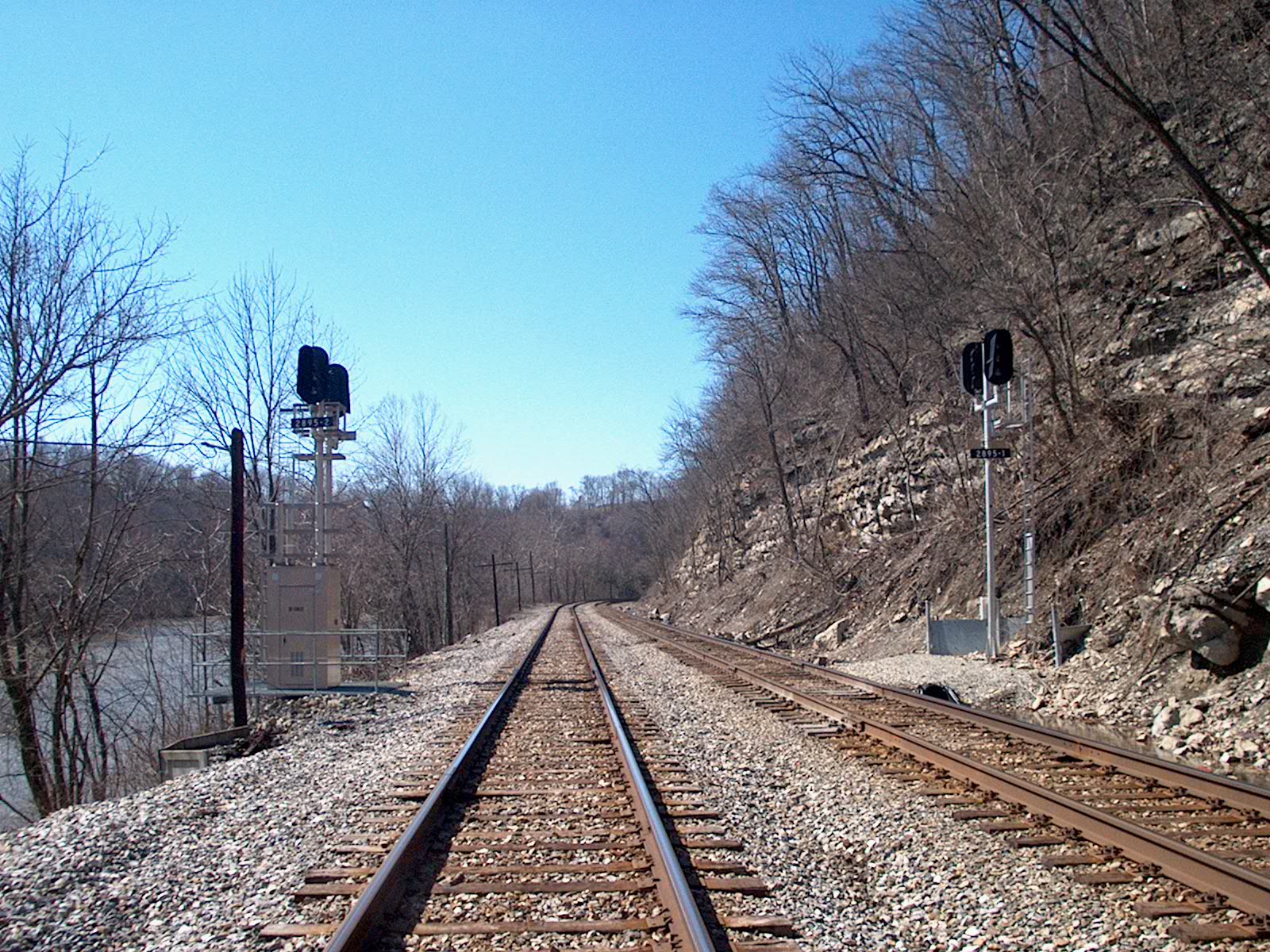
I loaded fresh batteries in my seldom-used camera and set off to the railroad tracks that run along the Youghiogheny River by Smithton.  I don’t know why the railroad tracks are my favorite place to saunter, but I did not hesitate.  To the left lay my church and relatively familiar territory.  To the right, a few houses and then the unknown as the tracks followed the bend of the river.

I had not gone far in this direction before.  Since my heart problems two years ago, I have found myself cautious about placing myself far away from help and cell phone signals.  But, today, I knew that I needed to cast all cautions aside.
I always wear sneakers on these walks.  Every time I return, I tell myself that I should wear boots, to better cope with the tricky footing.  But, somehow I like the feel of the ballast rocks through my shoes and the almost-skating motion of walking on the trackbed gravel.  The sun warmed me quickly for early March, and I removed my jacket after a short time.  I passed the last house and ventured forward, the steep hillside on my right and the swollen river on my left.

Soon, I approached the signal towers on either side of the tracks.  This was as far as I had ever gone in previous walks.  The sound of traffic crossing the Smithton Bridge had receded, and I hesitated for just a moment before proceeding.

After only a few minutes, an ominous omen (are all omens ominous?).  I saw the body of a dead muskrat lying between the tracks, clearly run over in just the past day or two.  Not an unusual sight – I saw half a dozen or so last year starting in early spring.  The message, however, seemed clear.  Death lay ahead.  I kept walking.

Another few minutes and another animal remnant.  This time, only the hoof and bottom half of a deer’s leg lie between the northbound and southbound rails.  That’s it – no other bones or any other reminder of the substantial body that once was.  Death lay ahead…and dismemberment.  A superstitious person might need no other signs.

The tracks had rounded another bend.  Ahead lay some pieces of wood strewn around the tracks.  Approaching closer, I recognized what remained of a century-old telephone pole – just a little of the cross piece and one glass insulator.  I was now cut off from all communication with my past, figuratively and literally.

Another bend and I saw three houses nearing on the river side of the tracks.  The smell of burning wood drifted toward me and I saw a man clearing away some dead branches and brush in a smoldering barrel.  He raised his hand in greeting and I returned the gesture.  I had emerged through the warnings.  Was I now being welcomed into some precognitive peek?

I caught a glimpse of what looked like bleachers coming up on my right and I wondered for a minute what spectator event could possible take place here.  Then I remembered.  The Smithton Hole racetrack – a very distant and poor cousin of Nascar and home to demolition derbies, truck pulls, and quad rallies.  The road that served as access to the houses I had passed crossed the tracks here.  A patch of color caught my eye.  In a ditch I saw a swath of green plants in a heavy-flowing runoff ditch – the first green I have seen this year.  Was something telling me that it was time to leave the railroad tracks?

On cue, I heard the whistle of an approaching train.  I walked over to the crossing sign to watch the behemoth rumble by.  Since I was a child, I delighted in counting the cars in long trains.  Only as an adult did I learn that this was one of the many relatively harmless obsessive-compulsive symptoms that seems to run in my family.  Nonetheless, I now find myself resisting the urge to keep track of the passing containers.  Instead, I feel the quiver of the ground and watch the vibrations of rail succumbing to the mass.

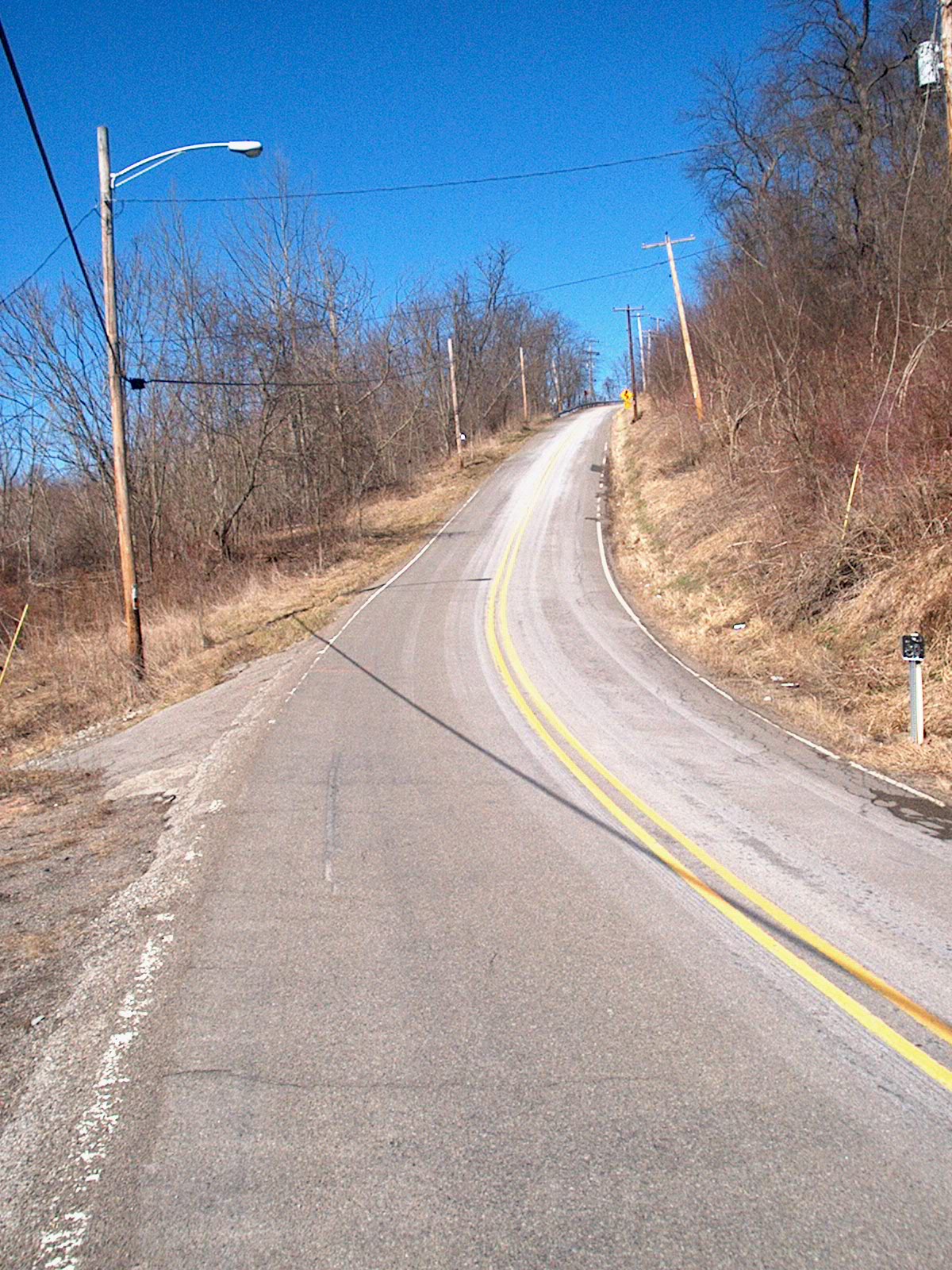
After the train went by, I turned and walked up the road. I soon came to a junction.  I knew the road to the right led to Fitz Henry and a dead end.  The road to the left led up a steep hill. I turned toward the open road.

Only a few buildings remain of what was once the town of Port Royal. In the late 1700’s, this area provided valuable access to the river and grain mills and iron furnaces.  George Washington once owned land just to the south near Jacob’s Creek.  What remains hardly qualifies as a town, however, and I soon approached a substantial climb out of the river valley.

By the time I reached the top of the tiny mountain, my joints ached.  A constant wind now blew against my face, invigorating me again.  No thought remained of needing my jacket again, as the sky supporting only one tiny wisp of cloud in the distance.

I knew that the old Port Royal School House sat ahead on this road.  I had researched this structure last year for the 150th anniversary of the Unitarian Universalist Congregation of Smithton.  Here, in 1860, the 11 charter members of the Universalist Church of Port Royal agreed on a covenant, creating the community that survives to this day.  I could not help but wonder if school children from Port Royal actually walked to this school house.  The thought put those clichéd parental stories of childhood struggle and hardship in a whole new perspective.

Also coming into perspective, still miles from home on this gorgeous day, was a calm.  My mind calmed.  For the first time in perhaps weeks, I wasn’t worrying about things over which I had no control.  I wasn’t trying to control things I couldn’t control.  Ironically, I’ve become addicted to an online game called Rebuild.  The game recreates survivors of the apocalypse trying to rebuild a city still infested with zombies, disease, and shortages of food and housing. It now occurred to me that I had spent the last five years rebuilding – my job, my home, my marriage, my mind, and my soul – so that I could set forth on this future as a minister.  In recent months, I kept thinking about all this effort and all that I have done and accomplished to poise myself at this gateway.  Now, I thought, maybe the time has come to stop focusing on the rebuilding and start living in the new life I had built.

Because, in the end, we can only build the best life we can and then we have to live in it.  We can renovate occasionally, but we can’t control everything – in fact we can control precious little.  So, my joints ached, but I walked a little freer, with just a slight spring to my step.

I walked by the old school house building and thought about those 11 people back in 1860.  The formed a church that still meets today.  But, little did they know that the nation would soon enter into an ugly Civil War.  They could not foresee the rocky future of the little congregation, constantly struggling against all odds to stay afloat.  I imagined the unbridled joy of those men and women starting something special, something that has endured.

I kept on, reaching the truck stop at the intersection Interstate I-70.  Ironically, the store lay in disarray due to major renovations (OK, I get it!).  I bought a Naked smoothie and a diet Mountain Dew.  I drank the smoothie too fast, but my poor out-of-shape body needed the 22 strawberries and 1.5 bananas.  I cracked open the pop and headed home.  The remaining mile down Dutch Hollow was all downhill – a stretch I have driven at least 100 times.

Whatever happens in the next few days, the world will continue.  I may be a little richer or poorer, a little more or less secure.  But, I will endure and I will do whatever I need to do and go wherever I need to go to continue my ministry.

Wonderful Resource for Victims of Abuse

Regular readers of the muse kennel and pizzatorium know that I love zombies.  I watch zombie movies, read zombie books, and have on occasion dressed up like a zombie and shambled with hundreds of other similarly afflicted fans of this genre.

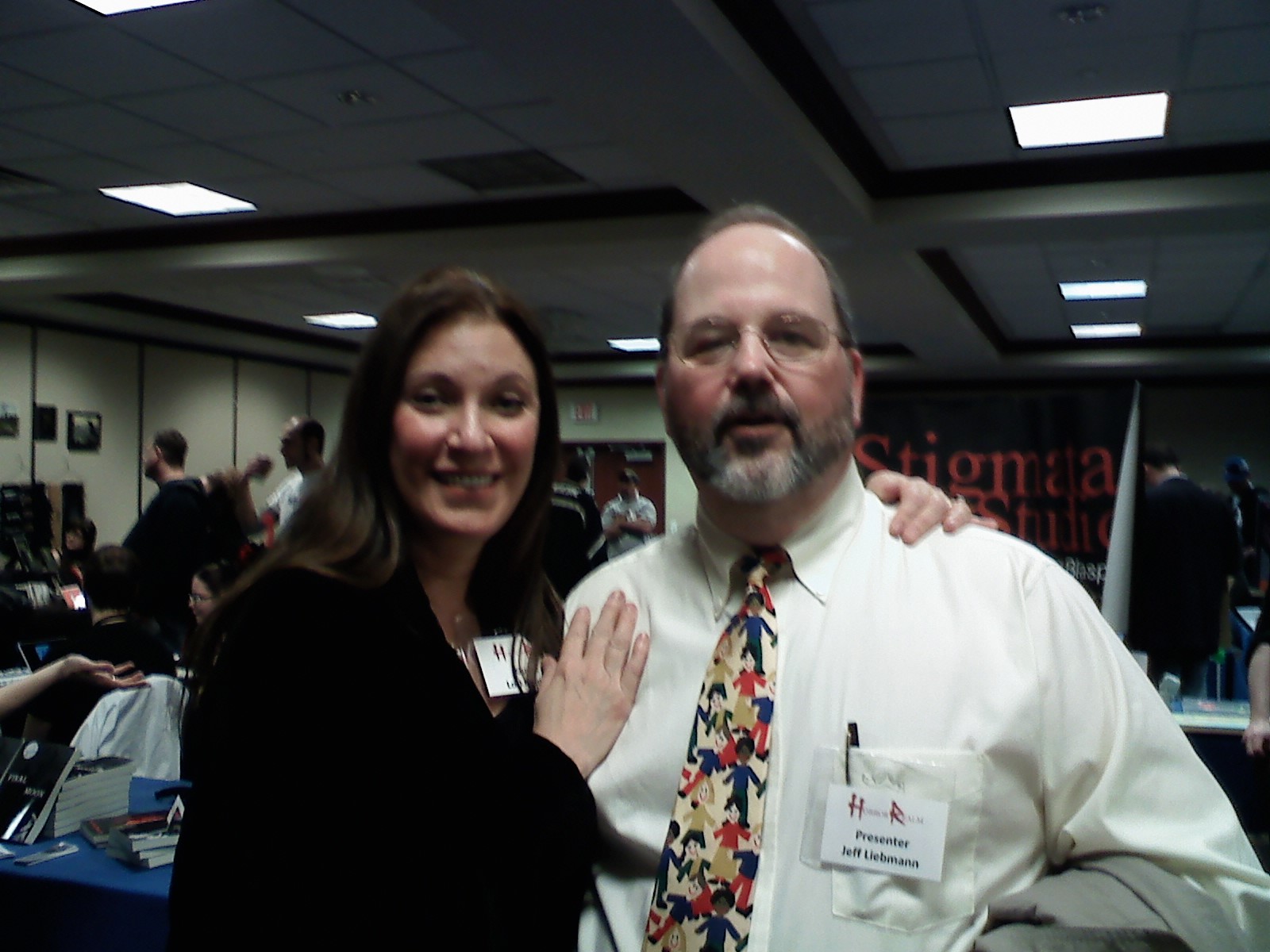
I can speak at great length about the relevance of “zombie theology.”  In fact, I recently spoke at a horror convention, delivering a session titled “Sermon of the Living Dead.”  Afterwards, I bought more some movies, picked up a couple more books, and examined zombie artists and news of upcoming zombie media events.

But, the highlight of my day was the opportunity to meet Lori Cardille. Lori is the daughter of Bill Cardille, known to many Pittsburghers as Chilly Billy Cardilly, host of Chiller Theatre for many years and one of the first horror movie hosts in the country. Lori starred in the lead role of George A. Romero’s third installment of his Living Dead series, Day of the Dead (the 1985 original and not the awful 2008 remake). I remain a huge fan of this film and particularly of Lori’s portrayal of Sarah, a scientist engaged in the hopeless search for a cure to the plague destroying humankind.

After waiting in line for 20 minutes or so, I introduced myself to this lovely and charming woman. We chatted and she signed my DVD of the movie (she donated the proceeds from her appearance to Pittsburgh Action Against Rape). And, I learned something fascinating about her.  She had written a short biographical account of her life, called I’m Gonna Tell.  Always on the lookout for pastoral care resources, I bought a copy and read it that night.

Lori’s account is frank, visceral, and incredibly informative.  For me, her story provided me with incredibly valuable insight into an experience I can only begin to comprehend.  She explores her journey and pain, relationships with relatives and friends, and her eventual confrontation with her abuser.  I would imagine that for a victim of abuse, her book would be healing and wonderfully supportive.

Irreverent Humor

I love comedy.  I especially love “irreverent” comedy.  I howled when Richard Pryor made fun of White people, when George Carlin speared countless taboos in our society, and when Andrew Dice Clay personified the misogynistic narcissist.  Objectionable?  Absolutely.  But, in my opinion, hilarious.

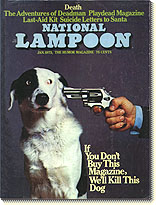
I grew up reading National Lampoon, and distinctly remember their humorous takes on the tragic circumstances in Biafra.  They pushed every boundary of humor, a mantle that continues to be pressed by South Park, The Simpsons, and other animation shows.

Satire provides a verbal version of risk that couch potatos like me prefer to downhill skiing on black diamonds, hang gliding from cliffs, and bungee jumping off bridges.  Of course, satire is a katana-sharp blade, cutting both ways.  Slapstick is OK, and insult comics have their place (Vegas and the Poconos), but for my money satire represents the pinnacle of the art form and should only be attempted by the seasoned professional.

As if watching my beloved Steelers bungle through the Super Bowl last Sunday weren’t painful enough, America was exposed to a botched National Anthem, a talentless halftime show, and generally uninspiring commercials.  In the latter category, we also witnessed quite probably the most offensive ad campaign ever launched on television.
Groupon’s parody of public service announcements were, in my opinion, so offensive and insensitive as to make me visibly wince with anguish.  One example, which tried to parlay the decades-long misery of a people into a cutesy ploy for your disposable dining dollars, left me in shock.  And despite a subsequent torrent of online criticism and derision, the company CEO remains unconvinced of his colossal heartlessness in approving these multi-million dollar spots.
Groupon cashed in on the pillaging and destruction of the rainforests, whales, and Tibet in making their play for your business.  What’s next?  Mocking the Holocaust to promote the local deli?  Citing the hilarity of Christina Taylor Green’s murder to hawk discounts at the local gun shop?  How about recalling the joy of 9-11 to sell us low-cost flying lessons?
Lest I be labelled politically correct, let me clarify the important distinction to be made between these various forms of comedic “art.”  When I bought National Lampoon, I knew exactly what my money secured.  When I watch Joan Rivers, Kathy Griffin, and Comedy Central roasts, I am making the conscious choice to expose myself to shock humor.  I do this because these people are paid specifically to challenge boundaries and afflict my comfortable sensibilities.  I do this because when they make Big Macs of our sacred cows, it empowers me to do the same against other injustices that I witness.  Their work at the edges of comedy opens the frontier for the likes of Michael Moore and John Stewart to populate our mainstream.  And, on occasion – such as the cases of Lenny Bruce and George Carlin – a comedian can actually promote incredibly worthwhile social commentary and criticism.
But, Groupon’s ads were an ambush in the name of nothing but pursuing the almightly buck.  These commercials mugged us not just with failed satire, but cruel profiteering garnered specifically at the expense of others’ suffering.  All of which I could forgive if the company either showed some level of compassionate understanding of peoples’ negative responses, or if they exhibited a legitimate commitment to helping alleviate the destruction caused by the situations they were exploiting.  But, a weak attempt at matching $100,000 of donations pales in comparison to the expense of producing these marketing ploys and purchasing network time to display them.
So, if you use Groupon and are equally offended, cancel your subscription and tell them why.  And when local businesses use their services, tell them why you will not be availing yourself of their products as well.

All Handguns Must Go – "Logic and Lawn Darts" (2/6/11 sermon)

Sometimes when I recall with romantic nostalgia my childhood, I wonder how we made it out of our formative years alive. My friends and I routinely played with toys that no company would consider manufacturing today. We romped on steel playgrounds anchored into crushed stone yards. And, we generally roamed the neighborhood unsupervised for hours at a time without fear of predators, abductors, molesters, or stray bullets.

Enough accidents and tragic occurrences raised the safety consciousness of a generation of Americans, so that now we can hardly avoid warnings of the mayhem possible from even the most innocent products. A few years ago, an online publication called Radar Magazine published a list of the most dangerous toys of all time. Obviously one can hardly expect such a list to be terribly scientific, but apparently the choices were made according to the ability of these toys to kill, maim, or generally be hazardous to the well being of children receiving them as gifts. I credit the authors of the list with spanning the last few generations of ingenious toy craft. I have no doubt that each of you will identify with at least one of these deliverers of destruction.

In tenth place was the Fisher-Price Harley Davidson Power Wheels Motorcycle. The throttle of this motorized vehicle apparently got stuck in full acceleration mode on occasion, sending the rider on an uncontrolled journey toward collision. In ninth place landed several 1979 Battlestar Galactica Missile Launchers, which propelled projectiles small enough to fit into unsuspecting throats.

Now, for the older children among us, we have our eighth place finisher, the Johnny Reb Cannon. While people apparently had no problems with its glorification of the Confederacy upon its release in 1961 (the centennial of the start of the Civil War), the Reb fired small, hard, plastic cannonballs up to 35 feet. Apparently, our toy makers don’t learn their lesson about small projectiles from one generation to another. At number seven, we have Creepy Crawlers. Of course, one could take one’s pick here from Easy-Bake Ovens to my personal favorite from my childhood, the Vacuuform. Nothing says safety like an open hot plate and exposed 100-watt light bulbs.

Another toy for the older generation comes in at number six. The Bat Masterson Derringer Belt Gun combined the cap-firing fun of a gun with a belt buckle. Number five brings us Sky Dancers – a toy of which I was blissfully ignorant before writing this sermon. Sold in the late 1990’s, one apparently stuck their little fairie feet into a launcher, pulled a string, and sent the twirling toys into the air.

We probably all remember those hideous (in my personal opinion) Cabbage Patch Dolls and number four brings us the 1996 Snacktime Kids Doll, which apparently had no shut off switch for its ravenous, munching jaws. At number three, Mini-Hammocks from EZ Sales. Unfortunately, children often found themselves emulating a chrysalis with no chance of emerging as a butterfly.

My personal favorite chimes in at number two. Gilbert, the company that gave us the infamous Erector Set, in 1951 produced the U-238 Atomic Energy Lab. For a mere $49.50, the kit came complete with four actual samples of Uranium-bearing ores, a Geiger counter, and a Spinthariscope (to see “live” radioactive disintegration). Lucky kids also received a comic book (Dagwood Splits the Atom) and a government manual titled, “Prospecting for Uranium.”

And now – drum roll please – the number one most dangerous toy of all time. Lawn Darts! Sort of a javelin-version of horseshoes (my set was known as Jarts), one lobbed the metal tipped arrows underhand toward a plastic hoop lying on the grass. The large spear impaled itself in the dirt, hopefully scoring points for the thrower.

Now, lest you think this particular survey unfairly castigates the dignity of these fine products, let’s review the known findings of reputable analysts. According to the Consumer Product Safety Commission, Fisher-Price recalled more than 200,000 of the Power Wheels Motorcycles in 2000 after receiving nine reports of the foot pedal on these mechanized deathtraps sticking. One 3-year-old boy suffered cuts and bruises when his out-of-control bike ran into a home. Mattel offered a “Missile Mail-in” to replace the small, red plastic bullets launched from the Battlestar Gallactica toys. Even though the product met or exceeded all existing and proposed safety standards at the time, there were instances of accidental swallowing of missiles, including one reported death of a four-year-old child.

One can imagine similar reports from the Johnny Reb Cannon, and the danger from Creepy Crawler burns were probably only exceeded by the nauseating taste of the toxic chemicals comprising them. One product safety organization reportedly claimed that the Bat Masterson belt gun’s caps “can be ignited by friction and cause serious burns.” I won’t speculate what kind of friction they thought a 10-year old boy would experience on his belt.

Injuries from Galoob’s Sky Dancers reportedly included scratched corneas and temporary blindness, mild concussions, broken ribs and teeth, and facial lacerations that required stitches. Nearly nine million Sky Dancers were eventually recalled by 2000 and the company fined $400,000. After 35 fingers and ponytails fell victim to Snacktime Kids’ appetites, Mattel removed them from shelves forever, and offered 500,000 customers a full $40 refund.

Between 1984 and 1995, twelve children between the ages of five and seventeen years old became entangled and died when using the Mini-Hammocks. A seven-year-old girl suffered permanent brain damage from a near-strangulation. A mother found her five-year-old boy entangled, but was able to resuscitate him. As a result, three million of the devices were recalled.

I won’t even hazard to speculate about the impact of the Atomic Energy Lab.

After deciding that voluntary agreements on stricter labeling and marketing were not having the desired effect, in 1987 the Consumer Product Safety Commission voted to ban lawn darts. The Commission had records of three deaths associated with lawn darts since 1970. Lawn darts were linked with an estimated 700 emergency room visits each year. Commission Chair Ann Brown went so far as to recommend that “Parents should destroy these banned lawn darts immediately.” Commissioner Anne Graham added, “What limited recreational value lawn darts may have is far outweighed by the number of serious injuries and unnecessary deaths…There are numerous alternatives to lawn darts, and I would urge adults who have lawn darts to throw them away now.”

Created in 1972 (sadly too late for some of our examples), the Consumer Product Safety Commission is a federal agency charged with protecting the public from unreasonable risks of serious injury or death from thousands of types of consumer products under the agency’s jurisdiction. The Commission’s work to ensure the safety of consumer products is believed to have contributed to the 30% decline in the rate of deaths and injuries linked to such products.

The Commission has jurisdiction “over more than 15,000 kinds of consumer products used in and around the home, in sports, recreation and schools.” But, the Commission does not claim jurisdiction over all categories of products. For example, food, drugs, cosmetics, and medical devices fall under the purview of the Food and Drug Administration; automobiles, trucks, motorcycles, and tires are the responsibility of the National Highway Traffic Safety Administration. Pesticides are included as part of the sphere of activity of the Environmental Protection Agency, and boats lie under the authority of the Coast Guard.

But, let’s move away from kid’s stuff (literally) and jump to the big three. Alcohol and tobacco are regulated by the Alcohol and Tobacco Tax and Trade Bureau, whose primary function is to “ensure that only qualified persons engage in the alcohol beverage industry… [and] enforcing the laws relating to tobacco products advertising.” And firearms fall under the Bureau of Alcohol, Tobacco and Firearms. BATF’s mission statement describes it as a law enforcement agency “that protects our communities from violent criminals, criminal organizations, the illegal use and trafficking of firearms, the illegal use and storage of explosives, acts of arson and bombings, acts of terrorism, and the illegal diversion of alcohol and tobacco products.”

You may note a subtle distinction between the roles of these various entities. The Consumer Product Safety Commission regulates the distribution and the design and manufacture of consumer products. The Alcohol and Tobacco Tax and Trade Bureau and the BATF, on the other hand, only regulate the distribution of the products within their sphere of operation, as well as the improper use of them by consumers. So, while the government empowers the Consumer Product Safety Commission to prevent companies from producing a dangerous product, the other agencies can only penalize those who abuse the laws regarding the sale, distribution, and use of alcohol, tobacco, and firearms once they have already been manufactured. One agency recaptures the cow after leaving the barn. The other keeps the calf from being born at all.

I am sure that critiquing the operations or the relative success of any of these important government bodies provides ample employment to various watchdog groups and analysts. Given their particular notoriety, one could certainly spend significant time examining the merits (or lack thereof) of certain historic BATF actions. Instead, I offer a suggestion that will simplify the work of every BATF agent by removing any ambiguities from their mission to protect this nation’s communities.

I call for a total ban on privately-owned handguns and for the confiscation and destruction of all such weapons in existence. I call for the elimination of all private ownership of handguns in this country and a ban on the production of handguns for the use of anyone but authorized law enforcement agents forever.

I understand that efforts to control handguns in this country have met with one failure after another. Since the shooting of James Brady in 1981 during John Hinckley’s attempted assassination of President Ronald Reagan, gun control advocates have run into one roadblock after another, largely due to the furious lobbying efforts of the National Rifle Association.

But, I do not call for gun control. I do not advocate for expanded background checks, or increased regulations on vendors. I do not care what the founders wrote 200 years ago or how even the most impartial jurist might interpret their meanings today. The time is long overdue for us as a nation to completely and forever cut our ties with all handguns as being inimical to human life, liberty, and the pursuit of happiness.

Now, I suspect even the most peace-loving among you might contemplate certain questions that arise from this call:

  • What’s wrong with owning a handgun for target shooting?
  • What’s wrong with carrying a handgun for my personal protection?
  • How will we get handguns away from criminals?

Legitimate questions – let’s address each one.
 
Some people own handguns merely for the enjoyment of target shooting. I myself have fired pistols at a shooting range and understand the pleasure of the sport. Let’s recall our list of infamous toys. All 10 combined resulted in fewer than 20 deaths. Obviously, the preventable and unnecessary death of even one child should deeply sadden us. But, lawn dawns caused only three reported deaths over 16 years, and were banned by the federal government.
 
In contrast, even the most ardent supporter of handgun ownership must agree that many hundreds of thousands of people have died from handgun homicides, accidents, and suicides during my lifetime. If we can ban businesses from even manufacturing a toy with only the potential of personal injury, why can we not ban a product with a long-proven track record of far more death and destruction?
 
But, criminals still have guns and I need to protect myself. Yes, you do. Let’s examine our actions in response to other similar circumstances. The federal government began establishing standards to phase out the use of lead additives to gasoline when the harmful effects to human health and the environment became apparent. Environmental protection regulations caused the automobile industry to turn itself on its collective ear to alter vehicle design and assembly, and the oil industry was forced to change its gasoline production and distribution processes. And, aside from the reported deaths of original research team members early on of lead poisoning, leaded gas was not likely linked directly to any deaths. From January 1, 1996, the Clean Air Act banned the sale of leaded fuel for use in on-road vehicles. Possession and use of leaded gasoline in a regular on-road vehicle now carries a maximum $10,000 fine.
 
The point is that we identified an inherent danger. We found a usable alternative – unleaded gas – and we banned the dangerous product. So the obvious question arises. Does an alternative exist to handguns for personal safety purposes? Of course it does. And one alternative – the taser – works just as effectively, is much less prone to accidental misuse, and results in death only in rare cases. Tasers can already be legally carried (concealed or open) without a permit in 43 states.
 
What about handguns already being used by criminals? As gun ownership advocates fondly say, when we criminalize guns, only criminals will have guns. Baloney. I know that I should be more theological and intellectual about my response to this argument. But, if we banned handgun manufacture and importation, then only time and the enforcement of laws stand between us and a relatively handgun-free America. Handguns are not marijuana – people can’t grow pistols in their backyards.
 
Will a handgun ban stop violent crime? Of course not. Kids will find ways to injure themselves no matter how many sharp edges and toxic substances you remove from their environment. Likewise, criminals may well use rifles, knives, clubs, hand grenades, or just their fists to commit acts of violence. That argument, however, offers no reason to oppose efforts to attempt to reduce and even eliminate deaths directly associated with private handgun ownership.
 
What solutions do I offer if we attempt this transition? Given our government’s propensity for throwing money at solutions, I ask for a relatively modest sum to fund the following initiatives:
  • For one year, offer every recreational owner who turns in a handgun $100 in cash, or an appraised trade-in on a bow and arrow, rifle, shotgun, or other legal firearm of their choice – after that, all handguns will be confiscated and destroyed;
  • Provide every collector of historic handguns free conversion of their weapon, making it incapable of firing to avoid confiscation;
  • Offer every registered owner who turns in a protective handgun a free taser;
  • Provide research and development funding to Colt Manufacturing and the New Jersey Institute of Technology, who are working to perfect “smart guns,” and then convert every handgun used by law enforcement agents to incorporate biometirc recognition; and
  • Make mandatory sentencing associated with handgun-related crime so onerous, that no sane criminal will consider their use.

What would these initiatives cost? Estimates place the number of handguns in America at 200 to 300 million. We could partially offset the cost of the handgun buy-back program with modest taxes on the huge expected increase in taser sales and permit fees. Given our history of industry bailouts, and our exorbitant military expenditures over the years, the remaining costs far outweigh the direct potential gain in human life and reduction of human misery.
 
Now, I am no lawyer and have no interest in haggling over budgetary priorities and implications. But, as a clergyman, I must address certain recent decisions in our halls of government. A 5-4 Supreme Court decision in June 2010 on McDonald v. the City of Chicago, cited the Second Amendment’s right to bear arms – and specifically the right to possess a handgun – as “fundamental to the Nation’s scheme of ordered liberty” in trumping the ability of local governments to protect their residents by creating common-sense regulations on handguns. Also, in July 2010, Louisiana Governor Bobby Jindal signed into law a bill authorizing persons who qualify to carry concealed weapons, and having passed necessary training and background checks, to bring them to churches, mosques, synagogues, or other houses of worship.
 
After Columbine, Virginia Tech, and now the senseless murders recently in Tucson, I say, “enough.” I don’t care if you are a bodyguard, a state policeman, or a secret service agent charged with protecting the President, I welcome you into this house of worship. But, I do not welcome your weapons and I specifically do not welcome your handguns. Arrest me, sue me, fine me. But, I will never knowingly allow anyone to bring a handgun into any congregation I serve. If we take a stand against handguns, then let it start here in our houses of worship. Here, where we dedicate ourselves to loving our neighbors and to bringing about a better life on earth – here is where we say “no” now and forever to handguns.
 
Our government routinely bans products with only the potential to cause harm. Drugs that may well cure diseases face rejection after years of development and study. Foods that may only cause illness are regularly ordered destroyed. And companies that manufacture toys that perhaps may harm a child face fines, lawsuits, and bans. Saving just one nine-year-old like Christina Taylor Green would make a handgun ban worth any price.
 
So, where is our equivalent collective outrage against this far-greater ill plaguing our populace? I say it should reside here, here in our churches, mosques, synagogues, and other houses of worship. Here, as children of a higher purpose and universal laws of humanity and love, we should demand the protection from these threats to our well-being and to our lives.


A Pacifist’s Love for Hockey

In a cynical and imperfect world of human chaos, one occasionally glimpses scenes of flickering sanity.  I may be a pacifist, but as a lifelong Pittsburgher, I am by definition a sports fan.  That, of course, means that I root for the Steelers, Penguins, and even the Pirates (I still remember the glory days).  Watching last night’s Pens match against the Islanders, I witnessed an event that gives me hope for humankind.

First, I must preface my comments with an editorial on fighting in hockey.  I have watched hockey for 40-odd years now.  And in all that time, I don’t think I have ever seen anyone really get hurt in a hockey fight.  Oh, I’ve seen bloody noses and bruised egos.  But, I can’t recall ever seeing a combatant actually seriously damaged in a hockey fight.  That is because hockey players rarely engage in fights to damage each other.  Hockey players fight for far more important reasons — to change the momentum of a game; to respond to an action perceived to be beyond the acceptable parameters of play; or to remove a particular player from play for a short time for strategic reasons.

So, I argue that fighting in hockey is no more about violence than Greco-Roman wrestling, or log rolling.  Hockey fights are physical, but fundamentally about game tactics and player motivation rather than intending to harm another.

In last night’s Pens-Islanders game, the Pens were up 2-0 as time ticked down.  The Islanders pulled their goalie in order to put an extra attacker on the ice and the Pens scored an empty net goal, sealing the victory.  Here is where not only game strategy, but long-term team strategy enters the game.  Matt Cooke of the Penguins is a player who specializes in disrupting opponents’ strategy.  He is a master of checking players into the boards and interrupting play development.  Cooke also likes to “get into your head” by building the threat of intimidation.  The last time these two teams played, Cooke especially worked his talents on Islanders goalie Frank DiPietro — he was actually penalized twice for goalie interference.  So, while we received the penalty of playing a man short for four minutes, we gained the strategic advantage of putting just that moment of hesitation in the mind of the opponent’s goal tender whenever Cooke was around.

Now, fast forward to last night, with the Pens up 3-0, the game essentially over, and 16 seconds left in the game.  As Cooke skated by DiPietro pursuing the puck, the goalie swatted at Cooke’s head with his blocker, knocking him into the boards.  While unprovoked, DiPietro’s illegal hit was clearly a retaliation for all of Cooke’s previous attention to him.  Brent Johnson, the Pens’ goalie, did not hesitate for a second before racing the length of the ice, and flattening DiPietro with a left to the chin.

Now comes the interesting part (to me).  Johnson is now poised over the prone DiPietro, fist cocked and seemingly ready to do some serious damage.  He held that pose for a few seconds, clearly showing that he had the ability to inflict damage.  But he chose not to.  A Just War advocate might argue that Johnson exhibited a text book response to aggression.  His action against the aggressor had just cause, was rightly intended, and was exactly proportionate.

Now, maybe I am rationalizing my love for a Neanderthal sport that has no place in a modern, gentile society.  But, I hold that competition has merit in society and that competition, whether it is marbles, poker, or yodeling, is inherently violent to some degree — violence in the sense that competitors try to exert dominance over opponents and, thereby, show their mastery not just of a particular skill, but of the way the skill is displayed, i.e. the rules of the game.

Does hockey go “over the top” sometimes.  Sure.  But, I believe that the benefits far outweigh the potential for real harm.  Living in Pittsburgh, a city that our economy has long forsaken, I have seen the vital role that sports play in raising the spirits of the community and bringing people of all colors and stripes together in common purpose.  And, occasionally, one is even provided the gift of a lesson in humanity while being entertained.  Thanks, Brent Johnson.

Oscar’s Back in the House

Yo, cousin Phil!  What’s up with this crazy weather?  All this ice and snow is cramping my style, you know?  Jeff doesn’t like to drive in bad weather, so I’m stuck here while he works on sermons…booooring!

And don’t give me that “I can’t control my shadow” stuff.  Haven’t you heard about the interdependent web and all that?  We are one with nature!  Empower yourself to take control of the situation and let’s have an early spring this year.

Oscar

(editor’s note — sorry, folks.  Oscar got hold of my cell phone while I was in the shower)